
Views: 0 Author: Site Editor Publish Time: 2025-10-14 Origin: Site


Imagine a world where industrial safety is compromised by leaks and pressure failures. That's where DBB ball valves come in. These specialized valves are pivotal in ensuring safety and efficiency in industrial systems. In this article, you'll learn about the critical role DBB ball valves play in maintaining industrial safety and how they prevent potential hazards.
A Double Block and Bleed (DBB) ball valve is a specialized valve designed to provide a high level of safety and isolation in industrial piping systems. It combines the functions of two isolation valves and a bleed valve into a single unit. When closed, the two ball valves block fluid flow from both upstream and downstream sides. The space between these two balls can be vented or "bled" off, ensuring no pressure or fluid remains trapped inside the valve cavity. This design drastically reduces leak risks and enhances operational safety.
A typical DBB ball valve consists of:
Two ball valves: Each with its own seating surfaces that seal independently.
Bleed valve: Positioned between the two balls to vent trapped pressure or fluid safely.
Body housing: Encases the balls and bleed valve, often made from high-strength materials to withstand harsh industrial environments.
Actuator or handle: Used to operate the balls and the bleed valve, either manually or automatically.
The two balls operate independently but are integrated into one valve body, simplifying installation and maintenance.
DBB ball valves differ significantly from single block valves or traditional valve setups:
Single Block Valves: Only isolate flow on one side, leaving the potential for pressure buildup or fluid trapped downstream.
Multiple Valves Setup: Using separate block valves and a bleed valve requires more space and increases leak points.
DBB Ball Valve: Offers a compact, all-in-one solution reducing installation complexity, saving space, and minimizing leak paths.
For example, in industries where hazardous fluids must be isolated safely during maintenance, DBB ball valves provide a reliable barrier and a safe way to vent pressure, unlike simpler valves that might not prevent fluid leakage or pressure buildup effectively.
DBB ball valves come in different configurations, each designed to meet specific industrial needs. Understanding these types helps you pick the right valve for safety and efficiency.
The Double Isolation and Bleed, or DIB, is the most common DBB valve configuration. It features two independent ball valves inside a single body, each able to block flow from either side. Between these balls sits a bleed valve that vents trapped pressure or fluid safely. This setup ensures bi-directional isolation, meaning it can block flow coming from either direction.
Key benefits of DIB valves:
Provide complete isolation on both upstream and downstream sides.
Allow safe venting of pressure trapped between the two balls.
Reduce the need for multiple separate valves, saving space.
Minimize leak points, enhancing safety.
Industries handling hazardous or toxic fluids prefer DIB valves because they ensure no fluid leaks during maintenance or testing.
The trunnion-style DBB ball valve uses a different design optimized for high-pressure applications, such as oil and gas pipelines. It features a ball that is supported by trunnions (shaft supports) at the top and bottom, reducing the load on the seats and making it easier to operate under high pressure.
This type isolates flow on both sides and bleeds pressure from the cavity between the seats, but it typically operates uni-directionally, meaning it is designed for flow in one main direction.
Advantages of trunnion-style valves:
Ideal for high-pressure, high-temperature environments.
Lower operating torque due to ball support.
Longer seat life under demanding conditions.
Effective isolation and pressure venting.
This configuration suits pipelines transporting oil, gas, or other fluids where pressure control and valve durability are critical.
Selecting between DIB and trunnion-style DBB valves depends on your system’s requirements:
| Factor | DIB Valve | Trunnion-Style Valve |
|---|---|---|
| Flow Direction | Bi-directional isolation | Typically uni-directional |
| Pressure Range | Moderate to high | High pressure and temperature |
| Space and Weight | Compact, lighter | Heavier due to trunnion support |
| Application Examples | Chemical plants, pharmaceuticals | Oil and gas pipelines |
| Operating Torque | Higher compared to trunnion | Lower due to ball support |
Consider your system’s pressure, temperature, flow direction, and maintenance needs. For example, if your pipeline requires isolation from both directions and space is limited, a DIB valve is preferable. For high-pressure oil and gas applications, a trunnion-style valve offers durability and ease of operation.
DBB ball valves play a crucial role in calibration and testing processes, especially in industries where precise measurements are vital. For example, in petrochemical plants or power generation facilities, technicians need to isolate parts of the system safely to conduct accurate tests. The DBB valve allows isolation of components and venting of trapped pressure between the two sealing balls. This ensures that the equipment under test is free from pressure interference, improving measurement accuracy and operator safety.
In processes handling sensitive or hazardous fluids, preventing contamination is critical. DBB ball valves help by isolating pipeline sections and safely venting pressure before switching between different products. Industries such as pharmaceuticals, food and beverage, and chemicals benefit greatly from this feature. By ensuring a clean break between fluid streams, these valves maintain product purity and comply with strict safety and quality standards. This isolation prevents cross-contamination and protects consumers and the environment.
The oil and gas sector relies heavily on DBB ball valves for pipeline isolation during maintenance, testing, or repairs. These valves prevent product mixing when different fluids or gases flow through the same pipeline. For instance, when switching between crude oil grades or gas types, DBB valves ensure no mixing occurs, maintaining product integrity. Their ability to safely vent trapped pressure also reduces risks of leaks or accidents, which is essential in managing hazardous substances.
DBB ball valves enable maintenance on specific pipeline sections without shutting down the entire system. This capability is valuable in continuous processes like chemical manufacturing. Operators can isolate a valve section, vent pressure safely, and perform repairs or cleaning while the rest of the system remains operational. This reduces downtime, improves operational efficiency, and enhances worker safety by preventing unexpected fluid release during maintenance.
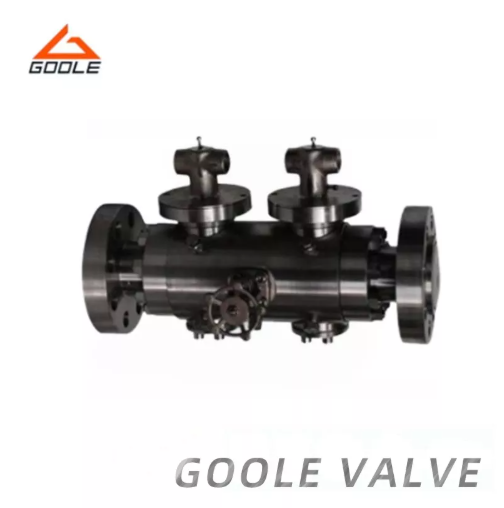
DBB ball valves provide unmatched safety by offering double isolation. Each ball seals independently, stopping fluid flow from both sides. The bleed valve between them vents any trapped pressure or fluid. This design prevents leaks that could cause accidents or environmental harm. In hazardous industries like oil and gas, this leak prevention is critical. It protects workers and equipment from exposure to dangerous fluids or gases. Also, it helps avoid costly downtime caused by valve failure or fluid escape.
Using a DBB ball valve simplifies piping systems. Instead of installing multiple valves, one DBB valve does the job of two isolation valves plus a bleed valve. This reduces installation time, lowers maintenance efforts, and saves space. Operators can isolate and vent sections quickly during maintenance or testing. This speeds up work and minimizes system shutdowns. The compact design also reduces overall system weight, easing support structure requirements. These efficiencies translate into cost savings and improved process uptime.
Many industries face strict regulations on emissions and leaks. DBB ball valves help meet these rules by sealing tightly and venting trapped pressure safely. They reduce fugitive emissions, which are leaks of gases or vapors from equipment. By preventing leaks, these valves protect the environment and reduce pollution risks. This compliance is vital in chemical, pharmaceutical, and oil and gas sectors where hazardous fluids are common. Using DBB valves demonstrates a company’s commitment to environmental stewardship and regulatory adherence.
Selecting the right double block and bleed (DBB) ball valve is crucial for safety and efficiency. Several key factors ensure the valve fits your system’s needs and performs reliably.
First, check the valve’s pressure and temperature limits. Your system’s operating conditions must fall within these ratings. Using a valve rated too low can cause leaks or failures, risking safety and downtime. For example, high-pressure steam lines need valves designed to withstand extreme heat and pressure. Conversely, low-pressure systems may use lighter valve designs to save cost and weight.
Always verify the maximum allowable working pressure (MAWP) and temperature range specified by the manufacturer. This prevents unexpected valve damage during operation or maintenance.
Next, consider the fluids or gases flowing through the valve. Different materials resist corrosion, erosion, or chemical attack differently. For corrosive fluids like acids or salty water, stainless steel or special alloys may be necessary. For hydrocarbons, carbon steel often works well.
Also, check if the valve’s seats, seals, and body materials suit the fluid properties. Some fluids require soft seats for tight sealing, while others need metal seats for durability. Selecting compatible materials extends valve life and prevents leaks or contamination.
DBB valves combine multiple functions into one unit, saving space compared to separate valves. However, size and weight still matter. In tight piping layouts or offshore platforms, a compact, lightweight valve simplifies installation and reduces support structure needs.
Trunnion-style DBB valves tend to be heavier due to their robust design for high-pressure use. Double Isolation and Bleed (DIB) valves usually weigh less, suitable for moderate pressures or where space is limited.
Assess your system’s space constraints and weight limits before choosing. A valve too large or heavy can complicate installation and increase costs.
DBB ball valves are crucial for industrial safety, offering reliable isolation and leak prevention. They enhance operational efficiency by simplifying systems and reducing downtime. Industries handling hazardous fluids benefit from their robust design and safety features. Selecting the right DBB valve ensures compliance with safety standards and optimizes system performance. Goole Valve technology Co., Ltd. provides high-quality DBB valves, emphasizing safety and efficiency. Their products offer long-term value by minimizing risks and maintenance costs, supporting industrial safety and reliability.
A: A DBB Ball Valve, or Double Block and Bleed valve, is designed to provide high safety and isolation in industrial systems by combining two isolation valves and a bleed valve in one unit.
A: A DBB Ball Valve enhances safety by blocking fluid flow on both sides and safely venting trapped pressure, reducing leak risks and preventing accidents.
A: Benefits include improved safety, operational efficiency, reduced leak points, compliance with environmental regulations, and minimized system downtime.
A: Unlike single block valves, DBB Ball Valves provide double isolation and include a bleed valve, offering enhanced safety and compactness.
A: Consider pressure and temperature ratings, material compatibility, space and weight constraints, and compliance with industry standards.


