


Imagine a valve that offers dual isolation and pressure relief in one compact unit. That's the DBB Ball Valve. It plays a vital role in industries like oil and gas, where safety and reliability are paramount. In this post, you'll learn what a DBB Ball Valve is, its importance across various sectors, and its key benefits and applications.
A DBB ball valve consists of two main balls, each with its own seat ring and operating mechanism. These balls act as the primary shut-off points. Between them lies a bleed valve, which vents any trapped fluid or pressure. The valve body houses these components and often includes features like a valve switch indicator to show open or closed status. Some models also have an automatic pressure relief device to prevent abnormal pressure buildup inside the valve chamber after closing.
The DBB ball valve operates by rotating the balls inside the valve body. Each ball has a hole through its center. When aligned with the pipeline, fluid flows through freely. Rotating the balls 90 degrees blocks the flow. To isolate a section, both balls are closed, stopping fluid flow from both sides. Then, the bleed valve opens to release any trapped pressure or fluid between the two balls. This ensures the isolated section is safe for maintenance or inspection.
Dual Isolation: Two separate balls provide double blocking, enhancing safety by isolating both upstream and downstream sides.
Bleed Function: The middle bleed valve vents trapped pressure, preventing hazardous pressure buildup.
Low Torque Operation: The design reduces friction between the sealing surfaces, making the valve easier to operate.
Maintenance Friendly: Valve seats can be replaced without removing the valve from the pipeline, saving time and cost.
Durability: Hard chromium plating inside the valve body improves wear resistance and extends service life.
Compact Design: Combining two valves and a bleed valve into one unit saves space and reduces installation complexity.
These features make DBB ball valves ideal for high-pressure, high-temperature, and hazardous fluid applications. They are widely used in industries such as oil and gas, petrochemical, and power generation where safety and reliability are critical.
Double Block and Bleed (DBB) valves come in various types, each suited for specific applications and industries. Understanding the different types helps in selecting the right valve for your needs. Here are the common types:
DBB ball valves use two spherical balls, each with a hole through the center, to control flow. When the holes align with the pipeline, fluid flows freely. Rotating the balls 90 degrees blocks flow. The bleed valve between the balls vents trapped pressure. They are ideal for tight shut-off, quick operation, and high-pressure systems. Industries like oil and gas, chemical processing, and water treatment widely use them.
Gate valves control flow by raising or lowering a rectangular gate inside the valve body. They allow full flow when open and provide a straight-through passage. Gate valves are reliable and affordable, suitable for on/off service but less effective for throttling. They are common in water, oil, and gas pipelines.
Globe valves regulate flow with a movable disk and a stationary ring seat. They offer precise flow control and are often used in steam systems, cooling water, and corrosive fluids. Their design creates more pressure drop than ball or gate valves but excels in throttling applications.
Check valves allow flow in one direction only, preventing backflow. They operate automatically without manual intervention. Made from corrosion-resistant materials, they protect pumps and compressors in water, fuel, and chemical systems.
Butterfly valves use a rotating disk to regulate flow. They are compact, lightweight, and suitable for large-diameter pipes. Common in water treatment, chemical plants, and HVAC systems, they offer quick operation but limited sealing compared to ball valves.
Plug valves have a cylindrical or conical plug that rotates to open or close flow. They provide quick shutoff and are used in oil and gas, petrochemical, and food industries. Their simple design makes them durable and easy to maintain.
Diaphragm valves use a flexible membrane to open or close flow. They are excellent for handling corrosive fluids and slurries. Common in pharmaceutical, food, and wastewater industries, they offer tight shutoff and easy cleaning.
Piston valves regulate flow with a sliding piston controlled by an actuator. They provide precise control and are used in compressors, boilers, and steam systems. Their design allows quick response and reliable operation under high pressure.
DBB ball valves play a crucial role across various industries by providing reliable isolation and pressure relief. Their design ensures safety and efficiency in processes involving hazardous or high-pressure fluids. Here are the primary industries where DBB ball valves are widely used:
In oil and gas, DBB ball valves ensure safe isolation of pipelines during maintenance or emergencies. They prevent leaks of volatile hydrocarbons and allow safe venting of trapped pressure. Their robust design suits harsh environments like offshore platforms and refineries, where reliability is critical to avoid accidents and environmental damage.
Petrochemical plants handle corrosive and toxic chemicals. DBB ball valves provide double isolation to prevent cross-contamination between process sections. They also allow safe bleeding of trapped fluids, enabling maintenance without shutting down entire systems. Their tight sealing minimizes emissions, supporting environmental compliance.
Power plants use DBB ball valves in steam, water, and gas systems. They isolate sections for repairs and control flow in boilers and turbines. The valves withstand high temperatures and pressures, ensuring safe operation and reducing downtime during maintenance.
On ships, DBB ball valves control fuel oil, ballast water, and fire protection systems. They isolate sections for repairs and prevent leakage of hazardous fluids. Their compact design fits limited spaces on vessels, and their reliability supports safe maritime operations.
Wastewater plants use DBB ball valves to isolate pumps, tanks, and chemical dosing lines. They prevent contamination and allow safe maintenance by venting trapped sludge or chemicals. Their corrosion resistance suits harsh wastewater environments.
In pipelines for oil, gas, water, and chemicals, DBB ball valves isolate segments for inspection or repair. They enable safe pigging operations by sealing off sections and bleeding pressure. Their durability ensures long service life in buried or exposed pipelines.
LNG processing demands high safety standards. DBB ball valves isolate cryogenic fluids and vent trapped pressure to prevent leaks. They operate reliably at very low temperatures and provide critical safety during storage, transfer, and vaporization of LNG.
Tip: When applying DBB ball valves in critical industries like oil and gas or LNG, ensure valves meet relevant standards and are tested for tight sealing and pressure relief to maximize safety and performance.
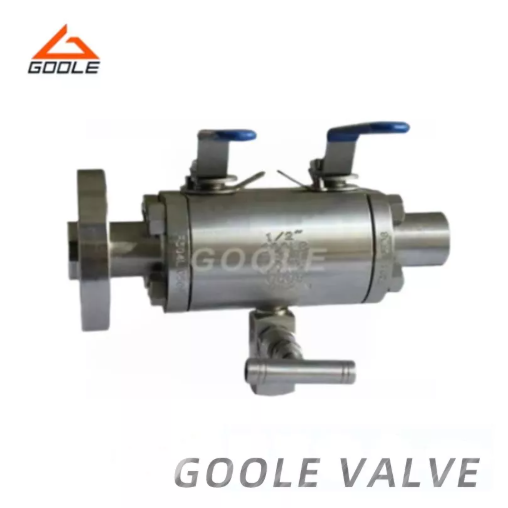
DBB ball valves offer several benefits that make them a preferred choice in many industrial applications:
Enhanced Safety: By providing double isolation through two separate balls, these valves minimize the risk of leaks and cross-contamination. The bleed valve between the balls helps release trapped pressure, ensuring safer maintenance and operation.
Space-Saving Design: Combining two block valves and a bleed valve into a single compact unit saves valuable space in piping systems, especially where installation area is limited.
Easy Operation: The low torque design allows quick and effortless opening and closing, making them suitable for applications requiring fast shutoff.
High Flow Capacity: The full-bore design of ball valves allows uninterrupted flow with minimal pressure drop, improving system efficiency.
Maintenance Friendly: Seats and seals can often be replaced without removing the valve from the pipeline, reducing downtime and maintenance costs.
Durability: Hard chromium plating and robust construction enhance wear resistance and extend valve life, even under harsh conditions.
Selecting the right Double Block and Bleed (DBB) ball valve is crucial for safety, efficiency, and cost-effectiveness. Several factors influence the best choice for your application. Here’s what to consider:
Determine how absolute the isolation needs to be. DBB valves provide double isolation by blocking flow from both upstream and downstream sides, plus a bleed valve to release trapped pressure. If your process demands complete isolation to prevent leaks or cross-contamination, DBB valves are a strong choice. However, if your application requires even more stringent isolation, you might consider Double Isolation and Bleed (DIB) valves, which offer enhanced sealing capabilities.
DBB valves combine two block valves and a bleed valve into a single compact unit. This design saves space compared to installing three separate valves. If your piping system has limited room, a DBB valve’s compactness can simplify installation and reduce piping complexity. Still, even though DBB valves save space relative to multiple valves, they can be larger than single block valves, so measure your available space carefully.
Maintenance ease is key. DBB valves typically allow seat replacement without removing the valve from the pipeline, reducing downtime. However, their more complex design means they may require periodic inspection of multiple sealing surfaces and the bleed valve. Consider your maintenance capabilities and schedule. If you prefer simpler maintenance, valves with separate bodies like DIB valves might be easier to service individually.
DBB valves often cost more upfront than single block valves due to their integrated design and added components. However, they can reduce total system costs by saving space, reducing installation time, and minimizing leak paths. Also, fewer valves mean less piping and fewer potential leak points, which can lower long-term maintenance and safety costs. Balance your budget against these benefits to find the best value.
Selecting the right seat material for a Double Block and Bleed (DBB) ball valve is essential for ensuring reliable performance and long service life. The seat material must withstand the specific conditions of your application, including the type of fluid or gas, temperature and pressure, and the level of abrasion or corrosion. Here’s how to make the best choice:
The chemical properties of the fluid or gas flowing through the valve heavily influence seat material selection. Some fluids are corrosive, abrasive, or reactive, which can degrade certain seat materials quickly.
Corrosive Fluids: For acidic or alkaline fluids, materials like PTFE (Polytetrafluoroethylene) or reinforced PTFE are excellent choices. They resist chemical attack and maintain sealing integrity.
Hydrocarbons and Oils: Seats made from materials such as PEEK (Polyetheretherketone) or nylon can handle hydrocarbons well.
Gases: For inert or non-corrosive gases, standard materials like nylon or PTFE may suffice.
High Purity or Food-Grade Fluids: Seats made from FDA-approved materials ensure no contamination.
Choosing a seat material compatible with your fluid prevents premature wear and leakage.
Temperature and pressure can cause seat materials to deform or degrade if not properly matched.
High Temperatures: Materials like PEEK, graphite-filled PTFE, or metal seats withstand elevated temperatures better than standard PTFE.
Low Temperatures: For cryogenic applications, flexible materials that maintain sealing properties at low temperatures, such as certain elastomers or special polymers, are required.
High Pressure: Seats must resist extrusion or deformation. Harder materials or metal seats are often used in high-pressure environments to maintain a tight seal.
Always verify the seat material’s rated temperature and pressure limits against your system’s conditions.
If the fluid contains solid particles or is erosive, the seat material must resist wear.
Abrasion Resistance: Harder seat materials or those with special coatings like hard chromium plating can improve durability.
Corrosion Resistance: Materials that resist chemical attack, such as stainless steel or special polymers, help maintain valve integrity in corrosive environments.
Combining abrasion and corrosion resistance ensures the valve lasts longer and reduces maintenance frequency.
DBB ball valves offer dual isolation, bleed function, and low torque operation, making them ideal for high-pressure applications. They provide enhanced safety, space-saving design, and easy maintenance. When selecting DBB ball valves, consider isolation needs, space, and maintenance requirements. Goole Valve Technology Co., Ltd. provides high-quality DBB ball valves with advanced features, ensuring safety and efficiency in various industries. Their products deliver exceptional value, reliability, and performance for critical applications.
A: A DBB Ball Valve, or Double Block and Bleed Ball Valve, is a valve that provides double isolation and a bleed function to safely vent trapped pressure or fluids in pipelines.
A: A DBB Ball Valve works by using two balls to block flow from both sides and a bleed valve to release trapped pressure, ensuring safe maintenance or inspection.
A: DBB Ball Valves enhance safety by providing dual isolation and pressure relief, making them ideal for high-pressure and hazardous fluid applications.


