
Views: 0 Author: Site Editor Publish Time: 2025-10-07 Origin: Site


Ever wondered how industries ensure safety in high-pressure systems? The Double Block and Bleed (DBB) Ball Valve is a key player. This valve is crucial for isolating and venting fluids safely. In industrial applications, its role in preventing leaks and ensuring maintenance safety is paramount. In this post, you'll learn about the DBB valve's functionality, design, and its significance across various sectors.
A Double Block and Bleed (DBB) valve consists of three main components working together to ensure reliable isolation and safe venting of fluids. Understanding each component helps grasp how this valve achieves its critical safety function.
The first block valve is the upstream isolation valve. It stops fluid flow from entering the downstream pipeline or equipment. This valve acts as the initial barrier, preventing any pressure or media from passing through when closed. It is typically a robust ball or gate valve designed to withstand system pressure and provide a tight seal. Closing this valve isolates the upstream process, allowing safe maintenance or inspection downstream.
The second block valve is positioned downstream of the first valve. Its role is to provide a secondary isolation point, creating a double barrier against fluid flow. This valve ensures that even if the first valve leaks or fails, the system remains isolated. Like the first valve, it is usually a ball or gate valve capable of sealing tightly under pressure. Both block valves closed together guarantee complete isolation of the section between them.
Located between the two block valves, the bleed valve serves a critical safety and verification function. Once both block valves are closed, the bleed valve opens to vent or drain any fluid trapped in the cavity between the two isolation points. Venting reduces pressure and eliminates trapped media, preventing dangerous pressure buildup. It also allows operators to verify the integrity of the block valves — if fluid flows through the bleed valve, it indicates a leak in one of the block valves. The bleed valve is often a needle or globe valve, designed for precise control of venting.
A Double Block and Bleed (DBB) valve works by providing two independent barriers to fluid flow. First, the upstream block valve closes, stopping fluid from entering the downstream pipeline or equipment. This initial shutoff isolates the upstream pressure, preventing media from passing through. After this, the downstream block valve closes, creating a second barrier. Together, these two valves form a double block, ensuring that fluid cannot leak past either valve. This redundancy is essential for safety, especially in hazardous or high-pressure systems.
Between the two block valves sits the bleed valve, which plays a crucial role in safety and verification. Once both block valves are closed, the bleed valve opens to release any trapped fluid or pressure from the cavity between the two blocks. This venting prevents dangerous pressure buildup and allows operators to confirm that the isolation is effective. If fluid or pressure escapes through the bleed valve, it signals a leak in one of the block valves. Operators can then take corrective action before proceeding with maintenance or other operations.
The DBB valve design simplifies verification and maintenance. After closing both block valves and opening the bleed valve, operators monitor the vented fluid or pressure. No flow indicates tight sealing by both block valves, confirming isolation. If pressure remains or fluid flows, it means one valve leaks and needs attention. This process avoids guesswork and enhances safety during maintenance. Once verified, maintenance can proceed safely on the isolated section. After work completes, operators close the bleed valve, open the downstream block valve, then finally open the upstream block valve to restore normal flow.
This sequence ensures fluid containment, protects personnel, and prevents environmental contamination. The ability to test valve integrity without system shutdown or disruption is a major advantage of the DBB valve.
Double Block and Bleed (DBB) valves provide reliable isolation and safe venting, making them essential in various industries. Their design ensures safety, reduces leakage risk, and simplifies maintenance. Here’s how DBB valves serve key industrial sectors:
In oil and gas, safety and environmental protection are paramount. DBB valves isolate pipelines and equipment during maintenance or emergencies. They:
Prevent hazardous fluid leaks in high-pressure systems.
Allow safe venting of trapped gases or liquids.
Enable quick verification of valve integrity, reducing downtime.
Are used in critical points like pipeline isolation, sampling stations, and pressure measurement.
Their robust design withstands harsh conditions, including extreme temperatures and corrosive media.
Chemical plants handle aggressive and toxic substances. DBB valves provide double isolation to protect personnel and equipment. Key benefits include:
Safe maintenance without exposure to harmful chemicals.
Prevention of cross-contamination between different process streams.
Ability to vent and verify isolation before repairs.
Use in batch processing, hazardous material isolation, and interface points between chemicals.
Materials used for DBB valves in this sector must resist corrosion and chemical attack.
Power plants use DBB valves to manage steam, fuel, and cooling water systems. They:
Ensure tight isolation of high-pressure steam lines during maintenance.
Prevent leaks in fuel supply pipelines.
Help maintain critical cooling water circuits.
Reduce risk of unplanned shutdowns by providing reliable sealing.
Their compact design fits well in tight spaces often found in power generation facilities.
Sterility and contamination control are critical in pharmaceuticals and water treatment. DBB valves support these needs by:
Providing sterile isolation in clean-in-place (CIP) systems.
Allowing safe venting of process fluids.
Facilitating batch separation without cross-contamination.
Ensuring chemical injection points remain isolated during maintenance.
Valves in these industries often require special materials and certifications to meet hygiene standards.
Double Block and Bleed (DBB) valves offer several key benefits that make them essential in many industrial systems. Their unique design provides enhanced safety, verification capabilities, and efficiency in both space and cost. Let’s explore these advantages in detail.
Safety is the primary reason for using DBB valves. By providing two independent isolation points, these valves significantly reduce the risk of fluid leaks. Even if one block valve fails or leaks, the second valve acts as a backup barrier. This redundancy protects personnel, equipment, and the environment from hazardous fluids, gases, or high-pressure media.
The bleed valve between the two blocks allows trapped pressure or fluid to be safely vented before maintenance. This prevents dangerous pressure build-up and reduces the chance of accidents. Overall, DBB valves help maintain a safer working environment, especially in high-risk industries like oil and gas, chemical processing, and power generation.
One major advantage of DBB valves is the ability to verify isolation integrity without disrupting the system. Opening the bleed valve after closing both block valves lets operators check for leaks. If fluid or pressure escapes through the bleed valve, it signals a leak in one of the block valves.
This verification process enables early detection of valve failure, allowing maintenance teams to address issues proactively. It avoids guesswork and enhances confidence that the isolation is complete before work begins. This capability is vital in critical applications where valve failure could lead to catastrophic consequences.
DBB valves combine the functions of two isolation valves and a bleed valve into a single compact unit. This integration reduces the number of individual valves and connections required in a piping system. Fewer components mean fewer potential leak points and simpler piping layouts.
Installing a single DBB valve saves valuable space in crowded plant environments. It also reduces installation time and labor costs compared to using separate block and bleed valves. Maintenance becomes easier too, since operators only need to service one valve assembly instead of multiple units.
While DBB valves may have a higher upfront cost, their long-term savings on installation, maintenance, and downtime often justify the investment. They provide a cost-effective solution for achieving reliable double isolation and safe venting in demanding industrial settings.
Standard ball valves typically feature a single sealing system designed for simple on/off flow control. They rely on one seat to seal against pressure, providing basic isolation. While effective for many applications, these valves offer limited capability to verify sealing integrity during operation. The ball inside "floats" between seats and depends on media pressure to maintain a seal.
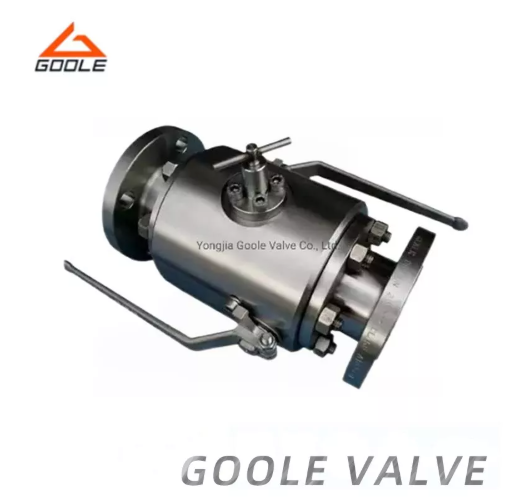
In contrast, Double Block and Bleed (DBB) valves have two independent sealing surfaces, creating dual barriers against fluid flow. This design ensures redundancy, so if one seal leaks, the other still isolates the system. Additionally, DBB valves include a bleed port between the two seals, allowing operators to vent trapped pressure or fluid and verify the integrity of both seals without disrupting the process. This capability significantly enhances safety and operational confidence in critical systems.
DBB valves combine two block valves and a bleed valve into a single compact unit. Their unique features include:
Dual Sealing Surfaces: Provide two independent isolation points.
Bleed Port: Enables venting trapped fluid or pressure between the two seals.
Leak Verification: Operators can detect leaks by opening the bleed valve; any fluid flow indicates seal failure.
Compact Design: Reduces space and piping complexity compared to installing separate valves.
Enhanced Safety: Redundant isolation minimizes risk of hazardous leaks in critical applications.
These features make DBB valves ideal for industries where absolute isolation certainty is essential, such as oil and gas, chemical processing, and power generation.
The terms Double Block and Bleed (DBB) and Double Isolation and Bleed (DIB) are sometimes used interchangeably but have distinct definitions depending on industry standards.
DBB Valves: According to API, a DBB valve is a single valve with two seating surfaces that seal against pressure from both ends. It includes a means to vent the cavity between seats. However, API notes this design does not provide positive double isolation when pressure exists only on one side.
DIB Valves: API defines DIB valves as having two seating surfaces, each sealing against pressure from a single source, with venting between them. This means DIB valves provide an additional seal on the pressure side, offering an extra layer of isolation.
In practice:
DBB valves seal against pressure from both sides, suitable for systems where pressure can be bi-directional.
DIB valves offer enhanced sealing on the pressure side, important for applications requiring extremely low leakage or complying with strict safety standards.
Choosing between DBB and DIB depends on the application’s pressure profile, safety requirements, and regulatory compliance.
Choosing the right Double Block and Bleed (DBB) valve is crucial for ensuring safety, reliability, and efficiency in your system. Several factors influence the selection, including pressure and temperature ratings, material compatibility, actuation methods, and certification requirements. Let’s explore these aspects to help you make an informed decision.
DBB valves must withstand the operating pressure and temperature of your system. Always select a valve rated above your maximum operating conditions to provide a safety margin. For example:
Pressure Ratings: Valves come with pressure classes such as ANSI 150, 300, 600, or higher. Choose one that matches or exceeds the system pressure.
Temperature Ratings: Materials and seals must tolerate the process temperature range, whether cryogenic lows or high heat.
Incorrect ratings risk valve failure, leaks, or damage, compromising safety and causing costly downtime.
The valve’s wetted parts must resist corrosion, erosion, and chemical attack from the process media. Consider:
Body Materials: Carbon steel, stainless steel, duplex stainless, or exotic alloys like Inconel, depending on media aggressiveness.
Seals and Seats: Materials like PTFE, PEEK, or metal-to-metal sealing, chosen for chemical resistance and temperature tolerance.
Selecting compatible materials extends valve life and maintains tight sealing, preventing leaks and contamination.
DBB valves can be manual or automated, depending on operation needs:
Manual Actuation: Suitable for infrequent operation or remote locations. Levers or handwheels offer simplicity and reliability.
Pneumatic or Electric Actuation: Ideal for remote control, automation, or safety interlocks. Enables quick response and integration with control systems.
Double Block and Bleed (DBB) valves ensure safety by providing dual isolation and venting capabilities, crucial for hazardous industries. They enhance operational safety by allowing leak verification without system disruption. The future outlook for DBB valves in industry is promising due to their ability to reduce downtime and improve safety. Goole Valve technology Co., Ltd. offers DBB valves that deliver reliable isolation and venting, providing significant value in maintaining safety standards across various industrial applications.
A: A DBB Ball Valve is a type of valve that provides double isolation and safe venting, ensuring fluid containment and operational safety.
A: A DBB Ball Valve works by using two block valves for isolation and a bleed valve to release trapped pressure, ensuring system safety and integrity.
A: Use a DBB Ball Valve for enhanced safety, leak prevention, and easy maintenance in high-risk industries like oil and gas.
A: Benefits include enhanced safety, leak verification, space efficiency, and reduced installation costs compared to separate valves.


