
Views: 0 Author: Site Editor Publish Time: 2026-02-03 Origin: Site


Ever sized a valve by habit and regretted the torque later? A Floating Ball Valve and a trunnion ball valve both isolate flow, yet they behave very differently once pressure rises. Those differences shape sealing contact, breakaway torque, and actuator sizing, especially as valve size and pressure class increase. In this guide, we explain how each design supports the ball, how it builds shutoff force, and why torque trends change. You’ll also get a practical selection path for engineers and B2B buyers.
In a floating ball valve, the ball is held by the seats. When pressure builds, it nudges the ball downstream. That tiny shift increases sealing contact where it matters most. The stem turns the ball, yet the seats do much support work. In a trunnion ball valve, shafts support the ball at top and bottom. The ball stays centered during rotation. Seats move to meet the ball instead. This structural difference drives how each design feels during operation.
A floating ball valve often uses line pressure to energize sealing. Pressure pushes the ball into the downstream seat, raising contact stress. It delivers a strong shutoff feel in many services. In a trunnion ball valve, the ball stays fixed, so seats provide the movement. Springs preload the seat against the ball, then pressure adds sealing force. This creates stable contact across operating states. Both methods can achieve tight shutoff. The key is how they build and maintain that contact.
Torque comes from friction, seat load, and pressure effects. In a floating ball valve, pressure increases the ball-to-seat load. That usually raises breakaway torque as pressure climbs. As size grows, contact area and friction can grow too. Trunnion support reduces seat loading on the ball during rotation. Seats take controlled movement, so torque stays more predictable. That predictability helps actuator sizing. When we plan automation, we care about repeatable torque. It protects actuators and improves cycle consistency.
Selection can be simplified by comparing structural, operational, and application data side by side. The table below expands key differences using typical engineering ranges, helping buyers match valve type to size, pressure class, and automation needs.
| Selection Factor | Floating Ball Valve | Trunnion Ball Valve |
|---|---|---|
| Ball support method | Ball supported by seats only | Ball supported by upper and lower shafts (trunnions) |
| Typical size range | DN15–DN150 (½"–6") common | DN150–DN1200 (6"–48") common |
| Typical pressure class | ANSI 150–600 | ANSI 300–2500 |
| Sealing force source | Line pressure pushes ball into downstream seat | Springs preload seats; line pressure adds force |
| Seat movement | Fixed seats, moving ball | Moving seats, fixed ball |
| Breakaway torque trend | Increases sharply with pressure | Relatively stable across pressure range |
| Typical breakaway torque (DN100, Class 300)* | 250–400 Nm (needs verification) | 120–200 Nm (needs verification) |
| Automation suitability | Suitable for small actuators and compact skids | Better for large actuators and pipeline automation |
| Shutoff behavior | Strong downstream sealing under pressure | Balanced sealing on both seats |
| Maintenance access | Easier in 3-piece body designs | Often top-entry for in-line service |
| Common applications | Water, chemicals, HVAC, utilities | Oil & gas, transmission pipelines, power plants |
| Cost profile (relative) | Lower initial cost | Higher initial cost, better scalability |
| Weight at DN300 (Class 600)* | Not common or oversized | Typical design, engineered for load |
| Best-fit usage | Compact lines, moderate duty | Large bore, high class, stable automation needs |
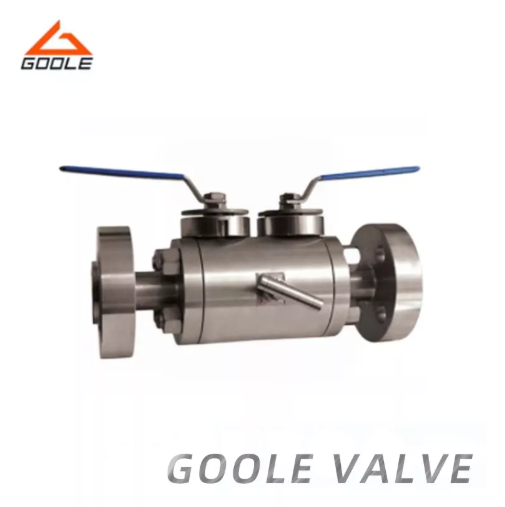
A floating ball valve seals using a simple, effective sequence. When you close it, the ball rotates to block the port. Upstream pressure then pushes the ball slightly downstream. That movement increases contact against the downstream seat. The seat material and geometry spread load around the spherical surface. This “pressure-to-seal” behavior feels reassuring in isolation duty. It also helps explain why the design is common in many plants. When we specify it well, it delivers consistent shutoff in daily operation.
A floating ball valve comes in several body constructions. One-piece bodies are compact and simple for standard service. Two-piece bodies balance cost and service access for many buyers. Three-piece bodies support in-line maintenance where downtime matters. The core floating principle stays the same, yet service handling changes. Body style affects how we replace seats or seals. It also affects end connections and installation layout. When we choose construction early, we reduce surprises later. It keeps procurement and maintenance aligned.
Many B2B users pick a floating ball valve for everyday isolation. It works well in utilities, process skids, and plant headers. It offers fast quarter-turn operation and clear open or closed status. For moderate sizes, it can be very efficient for both manual and automated service. Buyers also value its broad availability across materials and end types. When we match seat material to media and temperature, it performs reliably. The result is predictable isolation for common duty cycles, which supports smooth plant operations.
A trunnion ball valve supports the ball using bearings and shafts. The ball is held at the top and bottom by trunnions. During operation, it rotates without drifting under pressure. This changes how loads flow through the valve body. Seats do not need to support the ball’s weight or pressure thrust. That can reduce friction during rotation. It can also improve alignment in larger sizes. When we operate it repeatedly, the feel stays steady. That steady feel matters in automation and remote control service.
Trunnion designs often use seats that can move slightly. Springs push each seat toward the fixed ball. When pressure builds, it enhances sealing force in the correct direction. This combination gives reliable contact at low pressure and strong sealing at high pressure. It also supports consistent shutoff feel across operating ranges. Seat travel is controlled, so it remains stable. When we specify seat type, we think about media cleanliness and temperature. With a proper match, sealing stays dependable across many cycles and operating conditions.
Trunnion ball valves are common in pipelines and high-class systems. Their support structure handles large-bore loading well. They also align well with actuator-driven operation, where consistent torque is valuable. In oil, gas, and power service, buyers often focus on repeatable isolation and clear specification control. Trunnion designs help deliver that control at larger scales. They also support design features that manage internal forces cleanly. When your project needs a stable operating window, this design is often chosen. It makes selection straightforward for demanding duty profiles.
We can narrow options quickly using bore size. A floating ball valve is common in smaller and mid-size piping. It fits many skid packages and general plant lines. As size increases, designers often move toward trunnion support. That shift helps maintain stable operation and sealing behavior at scale. Many procurement teams use size thresholds in their standards. Those thresholds reduce variance across projects. Still, we should treat size as a guide, not a rule. We confirm using class, torque targets, and the process duty cycle.
Pressure class influences sealing load and operating torque. In a floating ball valve, higher pressure can increase seat load on the ball. That can push torque upward during breakaway. Trunnion designs manage pressure loads through shafts and bearings. That can keep torque more predictable. Many high-class specifications lean toward trunnion for that reason. Pressure class also affects materials, wall thickness, and end connections. Those details shape total valve weight and support needs. When we set class early, we also set realistic automation and handling plans. It keeps the whole package consistent.
Some services sit in an overlap zone, where both designs work well. In that case, we finalize using operating philosophy. If manual operation is expected, we check breakaway torque targets. If automation is planned, we define actuator type and air or power supply. We also confirm the shutoff standard and seat material. For a floating ball valve, we ensure the body style matches maintenance plans. For trunnion designs, we align seat design with process conditions. When we document these factors, vendor quotes become comparable. It speeds decisions and reduces later change orders.
Torque is not just a number. It changes across pressure, temperature, and cycle history. A floating ball valve may show higher breakaway torque after sitting under pressure. That comes from increased seat contact load and friction. Once it moves, running torque may drop. Trunnion designs often show more stable torque, because the ball remains supported and seats move in a controlled way. For automation, stable torque simplifies control tuning. For manual use, it improves operator comfort. When we compare quotes, we should request torque curves or at least rated breakaway values for the service.
Actuator sizing should start from the worst-case operating condition. We translate valve size, differential pressure, temperature, and cycling rate into torque demand, then select an actuator that can deliver that torque with a clear safety margin—at the minimum available supply pressure and across the full 90° travel.
Actuator Sizing Worksheet (Structured Checklist for Floating vs Trunnion Ball Valves)
| Category | Parameter | What it means (engineering intent) | Typical values / units (project-specific) | Practical use (Floating vs Trunnion) | Notes / cautions |
|---|---|---|---|---|---|
| Process inputs | Valve size (DN / NPS) | Determines sealing area, friction surfaces, inertia | DN25–DN300 common in plants (varies by industry) | Larger sizes usually drive higher required torque; trunnion often preferred as size increases | Always size from manufacturer torque data for the exact valve series |
| Process inputs | Pressure rating (ASME Class / PN) | Max design pressure envelope | Class 150–1500 / PN16–PN100 (common ranges; verify) | Floating designs can see stronger pressure-induced seat loading; trunnion torque is often more predictable | Do not assume “Class” alone—use actual operating ΔP |
| Process inputs | Differential pressure (ΔP) | Pressure drop across closed valve that creates seating load | kPa / bar / psi (must be defined) | Floating: ΔP tends to increase breakaway torque; trunnion: effect is usually less steep | Use maximum credible ΔP (startup, upset, blocked-in cases) |
| Torque inputs | Breakaway torque (T_break) | Peak torque to start moving from fully closed/open | N·m (from valve vendor) | Most critical value; floating ball valve often higher at high ΔP | Use highest expected breakaway, not average or “typical” |
| Torque inputs | Running torque (T_run) | Torque to keep rotating through travel | N·m (from vendor curve) | Used to confirm mid-stroke margin and avoid stalling | Do not size only on breakaway—check full-stroke torque curve |
| Torque inputs | End torque / seat torque | Torque near 0° and 90° where seats load most | N·m (from vendor curve) | Floating valves may peak near ends; trunnion often smoother | Confirm actuator can meet end torque at min supply pressure |
| Safety margin | Torque safety factor | Actuator output / required torque | Often 1.25–1.5 (industry practice; verify by policy) | Floating valves commonly benefit from higher factor due to seating effects | Increase factor for low air pressure, dirty service, low temperature |
| Thermal factors | Media temperature | Impacts seat friction, materials, lubrication | °C / °F (must be defined) | Both designs can see torque changes with temperature | Require torque values at temperature if service is hot/cold extremes |
| Service severity | Media type / cleanliness | Solids or sticky media raise friction and seat wear | Qualitative + ppm/particle size if relevant | Dirty service can penalize floating valves more due to seat loading | Specify solids content and particle size when applicable |
| Cycling duty | Cycle frequency | Drives wear, heat buildup, and actuator duty rating | cycles/hour or cycles/day | High cycling favors predictable torque behavior (often trunnion) | Ensure actuator duty cycle rating matches operation plan |
| Speed requirement | Stroke time (90°) | Fast action needs higher instantaneous power | seconds (s) | Pipeline ESD often needs faster close; torque margin becomes critical | Too fast can cause water hammer—coordinate with process safety |
| Actuator inputs | Pneumatic supply pressure | Governs pneumatic actuator torque output | MPa / bar / psi (site minimum & normal) | Torque output drops at low air pressure; sizing must use minimum | Use worst-case: regulator setpoint low + line losses |
| Actuator selection | Actuator type | Pneumatic (spring return/double), electric, hydraulic | — | Floating in compact skids often uses small pneumatic/electric; large trunnion often uses pneumatic/hydraulic | Choose based on utilities, fail position, speed, and control philosophy |
| Fail-safe need | Spring return vs double-acting | Defines fail-open/close and available torque in fail mode | — | ESD service commonly needs spring return; confirm spring torque curve | Spring torque varies through travel—verify it meets end torque |
| Mechanical match | ISO 5211 mounting | Standard interface for actuator-to-valve mounting | F05–F25 (depends on size) | Applies to both designs | Confirm bolt pattern, drive size, stem extension needs |
| Mechanical match | Drive coupling / stem | Ensures torque is transmitted safely | mm / inch, keyed/square | Larger valves may require heavier coupling and anti-backlash | Check coupling rating vs maximum actuator torque |
| Gearing (if used) | Gear operator ratio | Multiplies torque, reduces speed | Ratio (e.g., 1:3 to 1:30) | Common on larger valves to reduce manual effort or actuator size | Include gear efficiency losses (vendor to confirm) |
| Validation | Torque curve matching | Confirms actuator torque exceeds valve torque across full stroke | N·m vs position (%) | Trunnion often easier to match; floating can peak at ends | Do not accept sizing without a curve or validated worst-case points |
| Documentation | Vendor data required | Prevents “underpowered” selections | Torque curve, min air pressure output, ISO 5211, temperature rating | Critical for both valve types | Require these in RFQ to compare bids consistently |
Tip:Ask suppliers for the valve torque curve at your maximum ΔP and temperature, then size the actuator using the minimum site air pressure and a documented safety factor. This avoids last-minute actuator upsizing during commissioning.
Automation needs differ by service role. For frequent cycling, we focus on consistent torque and stem sealing performance. For remote operation, we focus on position feedback and safe failure modes. For emergency shutoff, we focus on fast response and dependable close force. A floating ball valve can perform well in automated skids when sized correctly. Trunnion designs often pair well with larger actuators in pipeline duty. In all cases, we set requirements for cycle life, control accessories, and commissioning support. When we align these details, startup goes smoother and control performance feels stable.
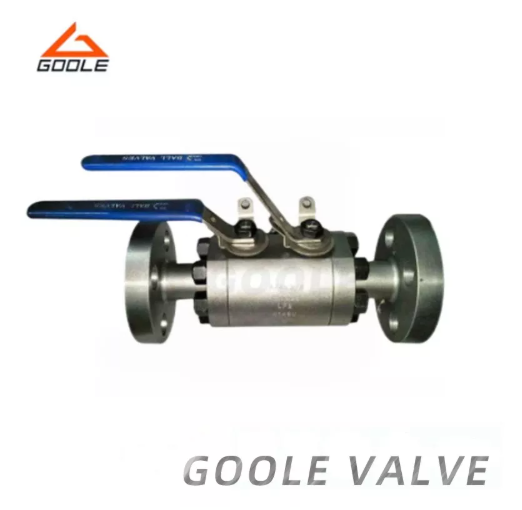
Buyers often say “zero leakage,” yet specifications use test standards. We should define shutoff class, test medium, and acceptable rate. A floating ball valve often achieves excellent shutoff in soft-seat designs. Trunnion designs can also achieve tight shutoff using seat preload and pressure assistance. The key is aligning expectations to standards used in inspection. We should also define direction of shutoff and operating conditions during testing. If the valve will see temperature swings, we mention that in the RFQ. Clear language helps suppliers choose the right seat design and ensures results match your acceptance plan.
Seat material shapes sealing behavior and service fit. Soft seats often deliver very tight shutoff in clean service. They also support smooth operation and low leakage acceptance. Metal seats suit higher temperature and abrasive media, depending on design. For a floating ball valve, seat selection influences how the ball shifts under pressure and how contact stress spreads. For trunnion designs, seat selection works with spring preload and pressure assistance. We should specify media, temperature, and any solids content. We also ask for seat material grades and certifications where needed. When we match seat to service, performance feels consistent and predictable.
Ball valves can trap pressure in the body cavity. That trapped pressure can rise with temperature or line pressure changes. Many designs include features to manage it safely, based on standards and service needs. In a floating ball valve, the sealing direction and seat design influence how pressure equalizes. In trunnion designs, seat movement and design features can support controlled pressure relief paths. For B2B projects, we should specify how the system handles cavity pressure. We also align this with safety standards and operating procedures. When cavity behavior is defined upfront, the valve design aligns better with system safety goals.
The core difference is clear: a floating ball valve seals as pressure shifts the ball, while a trunnion ball valve seals with a fixed ball and controlled seat loading. That design choice changes torque, sealing contact, and how well the valve supports automation as size and pressure class rise. For fast selection, start with pressure class and bore size, then confirm worst-case breakaway torque and actuator strategy, and finish by specifying seat material, shutoff standard, and cavity pressure behavior. Goole Valve technology Co., Ltd. supplies both designs and helps buyers turn requirements into reliable isolation value.
A: A Floating Ball Valve seals by ball movement under pressure; trunnion uses a fixed ball with controlled seat loading.
A: Use size and pressure class first; then confirm Floating Ball Valve breakaway torque and actuator margin.
A: A Floating Ball Valve sees higher seat loading as pressure rises, which can increase breakaway torque.
A: Often yes; a Floating Ball Valve is common in compact, general isolation, while trunnion fits larger, high-class automation.
A: Floating Ball Valve leakage often links to seat material mismatch or unclear shutoff standard and cavity pressure behavior.


