
Views: 0 Author: Site Editor Publish Time: 2026-11-04 Origin: Site


In high-pressure industrial environments like offshore oil rigs, natural gas refineries, and complex petrochemical plants, pipeline safety is not just an operational goal. It is a critical necessity. When maintenance crews service downstream equipment or calibrate sensitive instruments, operators must guarantee that pressurized, hazardous fluids are completely shut off.
Traditional isolation methods usually involve a cumbersome setup. Engineers would install two separate inline valves connected by a bulky spool piece, supplemented by a distinct bleed valve. While this conventional arrangement works, it is exceptionally heavy and expensive to install. Worse, it introduces multiple potential leak paths through numerous flanged connections.
Recently, stringent global emission regulations and the push for ultra-compact offshore platforms have forced a major industry shift. Operators are rapidly moving away from bulky multi-valve assemblies to curb fugitive emissions. The modern engineering answer is a highly integrated approach. By consolidating the functions of multiple components into a single forged body, facilities eliminate unnecessary weight and drastically shrink the physical footprint of their piping networks. This guide explores the mechanics behind these advanced fluid control devices, compares them to alternative configurations, and details exactly where they are deployed in the field.
Space and Weight Efficiency: Replacing legacy multi-valve systems with a single integrated unit slashes the pipeline footprint. It lowers installation weight and minimizes the need for heavy structural supports.
Enhanced Field Safety: This design guarantees reliable positive isolation. A central bleed mechanism vents trapped pressure, creating a verifiable safe zone for maintenance personnel working downstream.
API 6D Rigor: Governed by American Petroleum Institute standards, these mechanisms utilize dual seating surfaces to block fluid flow from both directions while actively bleeding the intermediate cavity.
Versatile Applications: These robust systems are indispensable across upstream extraction, liquefied natural gas processing, and high-accuracy custody transfer skids.
At its core, a DBB ball valve is an engineered fluid control device designed to provide a high-integrity seal against pressurized media. Double Block and Bleed technology abandons the reliance on a solitary sealing surface. Instead, this specialized component houses a dual-barrier system within a single forged or cast steel body. This guarantees that absolutely no fluid bypasses the pipeline when the mechanism is locked closed.
Its primary role is to function as an impenetrable barrier. Imagine a technician replacing a sensitive flow meter on a live flare gas line. The valve securely shuts off the fluid, preventing toxic leaks and ensuring total worker safety.
Technical parameters are rigorously outlined by the API 6D standard. The specification defines it as a single valve equipped with two seating surfaces. In the closed position, it provides a verifiable seal against pressure from both ends simultaneously. Crucially, it must feature a built-in means of venting the cavity located between these two seats. This integrated diagnostic capability elevates it far above standard block valves.
Grasping the operational brilliance of this equipment requires looking at its two primary functions. The blocking mechanism and the bleeding mechanism work in tandem to establish a fail-safe redundant environment.
Isolation relies on two independent ball seats in a standard trunnion design, or two entirely separate balls in a modular twin-ball configuration. When an operator closes the actuator, the upstream seat is forcefully pushed against the ball by the sheer pressure of the incoming fluid. This forms the primary barrier. Simultaneously, the downstream seat establishes a secondary defensive line against potential backpressure from the opposite end. Consequently, pressure is effectively halted from both directions.
Tucked into the central cavity of the valve body lies the bleed valve. This is typically a manually operated needle valve or a dedicated vent port. Once the main flow stops, operators open this secondary port to depressurize the trapped middle section.
Venting this central chamber serves two vital engineering purposes. First, it acts as a physical diagnostic tool for proving seat integrity. By opening the bleed port, operators visually verify that the main seats are holding firm. If the vent continuously drips fluid, one of the primary seats is compromised. If the exhaust stops after the initial depressurization, isolation is secure.
Furthermore, bleeding prevents thermal expansion damage. Trapped liquid hydrocarbons inside a closed metal cavity expand rapidly with ambient temperature spikes. Without a relief route, this thermal expansion easily warps seating materials or fractures the valve body entirely. Operators follow a strict sequence. They close the primary upstream block, ensure the secondary downstream block engages, and finally open the central bleed valve to exhaust trapped fluid.
Procurement sheets and engineering diagrams often use DBB and DIB interchangeably. However, the mechanical distinction is profound. Both provide enhanced pipeline safety under API 6D, yet their internal mechanics dictate different field applications.
To clarify these differences, refer to the technical comparison below:
Feature | DBB (Double Block and Bleed) | DIB (Double Isolation and Bleed) |
|---|---|---|
Sealing Direction | Seals against pressure from both ends simultaneously. | Provides redundant seals against pressure from a single direction. |
Seat Type | Typically utilizes self-relieving uni-directional seats. | Utilizes bi-directional seats (DIB-1) or a hybrid mix (DIB-2). |
Cavity Relief | Automatic. Excess cavity pressure pushes back into the pipeline. | Requires an external cavity pressure relief system (for DIB-1). |
Best Use Case | Isolating a pipe section from two competing pressure sources. | Absolute redundant isolation from a single highly volatile source. |
Choose a DBB setup when you need to isolate a section from two pressure sources and prefer automatic cavity relief. Conversely, opt for a DIB configuration when absolute redundant isolation from a single volatile pressure source is legally mandated.
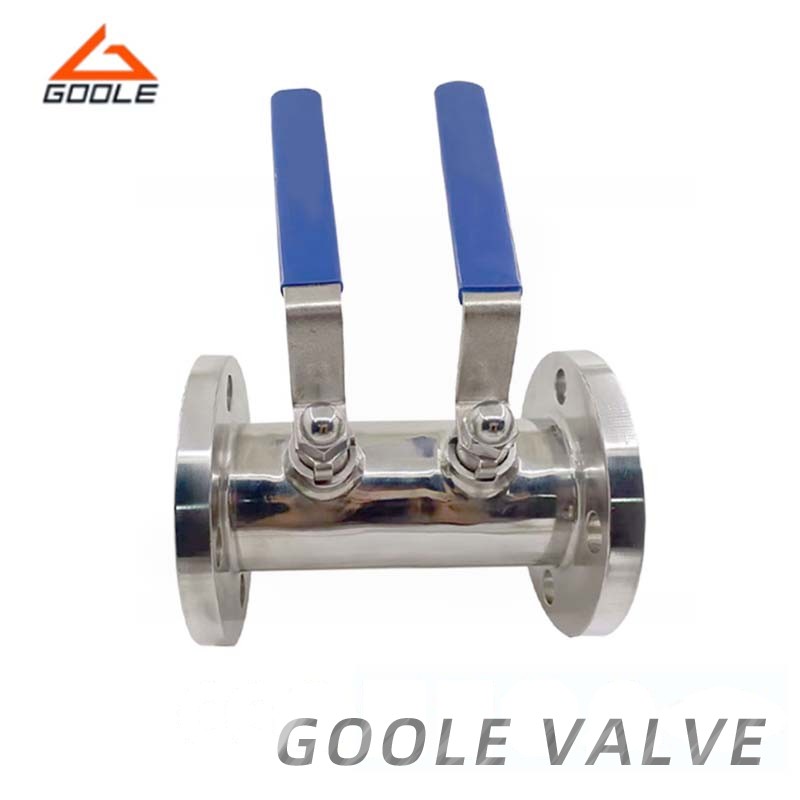
The industrial fluid control market offers various structural configurations. These are tailored to specific pressure classes, spatial limitations, and flow dynamics. Recognizing these variations is essential for accurate system design.
The modular design houses two completely independent balls and a central venting mechanism within a single forged steel body. Engineered to match standard flange-to-flange dimensions, it acts as the ultimate drop-in replacement for legacy multi-valve setups. It eliminates expensive pipe spool modifications. This makes it highly favored in offshore platform retrofits where every square inch matters.
Depending on line pressure, the internal ball is secured in two ways. In a trunnion-mounted design, a mechanical shaft anchors the ball at the top and bottom. Line pressure pushes the floating seats against the stationary ball to forge the seal. This is mandatory for high-pressure pipelines, easily handling Class 150 to Class 2500 ratings while keeping operating torque manageable. Floating designs suspend the ball in the fluid, allowing pressure to push the entire ball downstream. This is restricted to lower pressure classes and smaller bore applications.
Transitioning from antiquated multi-valve arrangements to an integrated isolation valve yields substantial mechanical and financial dividends.
Specifically, the most immediate advantage is the massive footprint reduction. Merging three distinct valves and a spool piece into one unit frequently achieves up to a 60% reduction in installation space and weight. This metric is vital on Floating Production Storage and Offloading vessels.
In addition, traditional setups require multiple flanged joints. Every single joint acts as a potential leak path. Utilizing a single forged body eliminates these intermediary connections entirely. This statistically plummets the probability of toxic environmental leaks.
From a financial perspective, installation time is slashed in half. Fewer heavy-duty pipe supports are required. Long-term maintenance overhead drops significantly since there are fewer individual components demanding routine inspection.
Virtually any heavy industry handling hazardous fluids under extreme pressure relies on the double block and bleed valve to maintain operational integrity.
In the upstream sector, robust forged steel units are utilized for wellhead isolation. Technicians safely choke off reservoir flow during routine maintenance. Downstream, they serve as the backbone for manifold isolation and long-distance transmission. Operators isolate specific sections for pigging operations without shutting down the entire refining network.
During the custody transfer of valuable hydrocarbons, liquid metering skids measure exact fluid volumes. Absolute zero-leakage is paramount. Even a microscopic bypass leads to massive financial discrepancies. These valves guarantee perfectly isolated flow during system calibration.
Processing Liquefied Natural Gas involves punishing cryogenic temperatures dropping below -162°C. Cryogenic variants feature extended bonnets and specialized low-temperature seals to prevent internal freezing. In petrochemical plants, pneumatic actuated DBB valves isolate highly corrosive chemical injection lines, preventing catastrophic cross-contamination.
Specifying the correct component requires meticulous evaluation of operating conditions, fluid characteristics, and international safety codes. Field engineers look at several critical parameters.
The valve body material dictates the lifespan of the installation. Standard applications rely on forged carbon steel like A105N or cast steel WCB. However, aggressive environments demand resilience. For pipelines exposed to offshore salt spray or sour gas, specify advanced alloys like F316 stainless steel, Duplex, or Inconel to prevent rapid degradation.
Project managers must choose between full bore and reduced bore. A full bore unit matches the connecting pipeline's internal diameter, ensuring zero flow restriction. This is non-negotiable for pipelines undergoing regular pigging. Reduced bore variants are lighter but introduce a pressure drop. Additionally, verify the end connections. Raised Face and Ring Type Joint flanged ends are industry standards for secure, high-pressure tie-ins.
Equipment must align with precise ASME pressure classes, generally ranging from Class 150 up to Class 2500. Manual levers or gear operators work for standard access. For remote or chemical injection applications, pneumatic actuated configurations are essential. Finally, verify API 607 Fire-Safe certifications and NACE MR0175 compliance for sour gas environments.
The DBB ball valve stands as an indispensable cornerstone of modern industrial fluid control. Flawlessly combining multiple components into a single engineered body guarantees absolute pipeline safety while saving valuable installation space.
Transitioning to this integrated technology minimizes fugitive emissions and aggressively cuts long-term maintenance costs. Navigating the subtle mechanical differences between DBB and DIB configurations, or selecting the right forged steel pneumatic actuated variant, requires an experienced manufacturing partner.
Do not leave facility safety to chance. For custom sizing, specialized material quotes, and high-performance industrial valve solutions tailored to exact field specifications, explore the comprehensive product range at Goole Valve today.
Yes. According to API 6D standards, a single trunnion-mounted ball valve equipped with two uni-directional seats and a dedicated body bleed port functions effectively as a DBB valve. When closed, it seals against pressure from both ends, allowing operators to safely vent the central cavity.
The bleed valve executes two critical functions. First, it lets maintenance personnel physically verify that the main block valves are holding pressure. Second, it actively relieves trapped cavity pressure, preventing severe mechanical damage caused by the thermal expansion of trapped liquid hydrocarbons.
Yes. Across strict industrial safety standards, a true double block and bleed arrangement is officially recognized as positive isolation. Providing a dual mechanical barrier coupled with a verifiable bleed mechanism establishes a secure environment for personnel performing intrusive downstream work.
The fundamental difference lies in directional sealing. A DBB valve seals against pressure from both ends simultaneously using self-relieving uni-directional seats. In contrast, a DIB valve provides dual, redundant seals against pressure originating from a single source direction using bi-directional seating.
Testing involves pressurizing the valve in the closed position and opening the central bleed port. If the primary seats are functioning correctly, there should be no continuous flow of fluid or gas from the bleed valve after the initial cavity depressurization. Any sustained leakage indicates a compromised seat.
In high-pressure industrial applications, flanged connections are the most common to ensure a leak-proof seal. This includes Raised Face and Ring Type Joint flanges. For smaller bore sizes or specific high-integrity lines, butt-weld or hub-type connections are also frequently utilized to eliminate flange leak paths entirely.


