
Views: 0 Author: Site Editor Publish Time: 2026-04-20 Origin: Site


Process pipelines face invisible threats from poorly specified flow components. Standard utility valves often suffice for basic water lines. However, improper port sizing in critical systems frequently causes severe mechanical issues. It leads directly to cavitation, rapid system wear, and premature catastrophic failure. Process engineers, piping designers, and technical procurement managers must deeply understand these fluid dynamics. We will clarify exactly what a full bore design means in industrial piping. You will learn how it alters pipeline fluid dynamics compared to standard alternatives. We also explain how to carefully balance operational necessity against total cost of ownership. Proper selection prevents costly maintenance shutdowns. It ensures continuous operational efficiency across demanding industrial applications. Specifying the correct internal geometry protects your entire infrastructure investment.
1:1 Ratio: A full port (or full bore) valve features an internal bore size identical to the inner diameter of the connecting pipe, ensuring zero flow restriction.
Fluid Dynamics: Eliminates pressure drops and turbulence, providing a high Flow Coefficient (Cv) equivalent to a straight piece of pipe.
Non-Negotiable Scenarios: Mandatory for pipeline "pigging" operations and handling slurries where pressure drops cause solid-liquid separation.
Cost Realities: Full port valves are physically larger and heavier, making them significantly more expensive—especially in exotic alloys—compared to standard port alternatives.
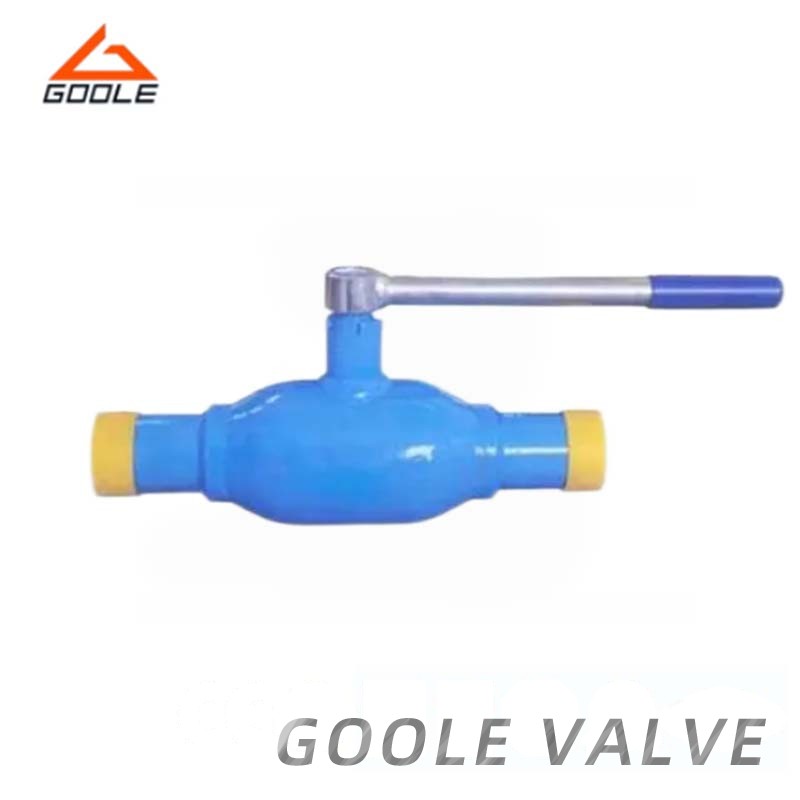
A typical Ball Valve operates by turning a sphere inside the valve body. This sphere has a hole, or port, machined right through its center. The exact size of this internal port determines the fluid categorization. Industry standards divide these into three primary baseline definitions. You must know these distinctions to specify piping correctly.
Full Port (Full Bore):
The internal ball opening perfectly matches the connecting pipe size. If you specify a 2-inch valve, it features exactly a 2-inch opening.
Outcome: This creates an unrestricted straight-through flow path. It eliminates physical obstructions entirely. The fluid passes through as if moving through a continuous straight pipe.
Standard Port (Standard Bore):
Manufacturers design the bore typically one pipe size smaller than the valve size. For example, a 3/4-inch valve will have a 1/2-inch internal opening.
Outcome: This configuration causes a slight flow restriction. It creates a mild velocity increase. However, it allows for a more compact valve body. It delivers a highly cost-effective solution for general utility use.
Reduced Port:
The internal bore is significantly smaller here. Engineers often size it two or more steps down from the main pipe diameter.
Outcome: Facilities use this specifically for precision chemical dosing. They also use it for intentional flow restriction. High pressure drops are entirely acceptable in these highly specialized environments.
Directional Behavior:
Port size does not dictate fluid flow direction. All standard two-way configurations support bi-directional flow. Fluid can enter from either side equally well. They provide excellent sealing capabilities regardless of the entry point.
Port Type | Bore Size Ratio | Flow Restriction | Primary Use Case |
|---|---|---|---|
Full Port | Identical to pipe (1:1) | Zero | Viscous fluids, slurries, pigging |
Standard Port | One size smaller | Slight / Mild | General utilities, clean water |
Reduced Port | Two+ sizes smaller | Significant | Precision dosing, planned restriction |
Piping systems respond violently to internal geometric changes. Engineers must evaluate how port sizes alter fluid behavior. Ignoring these fluid dynamics introduces hidden maintenance costs.
Flow Coefficient (Cv) Realities:
Engineers use Flow Coefficient (Cv) to measure fluid resistance. Cv defines the volume of water passing through a component per minute at a one psi pressure drop. Full port valves offer the highest possible Cv. They present the lowest internal resistance. High Cv means your pumps work less continuously. They consume less electricity over time. Low Cv ratings force pumps to push harder against internal friction.
Cavitation Risks:
Standard and reduced ports create a localized pressure differential. Fluid forces its way through a narrower opening. Its velocity increases sharply while its internal pressure drops. Rapid pressure drops cause dissolved gases to vaporize. Vapor bubbles form instantly in the fluid stream. As the fluid enters the wider downstream pipe, pressure recovers. This sudden recovery causes the vapor bubbles to collapse violently. We call this destructive mechanism cavitation. It sounds exactly like gravel passing through your pipes. The micro-explosions structurally erode internal seats. They destroy piping walls and eventually cause catastrophic leaks.
Turbulence and Throttling Limits:
Many operators incorrectly use these components for flow control. You should never use a spherical mechanism for flow throttling. This strict rule applies regardless of port size. Operating in a partially open state distorts the internal polymer seat. The fluid flow forcefully pushes against the partially exposed sphere. It creates immense localized turbulence. It ruins the seal mechanism quickly.
Common Mistake: Leaving isolation valves 50% open to control flow rates. This destroys the seating material in days.
Best Practice: Only operate them fully open or fully closed. Use globe designs if you need precise flow regulation.
Certain industrial environments remove all room for compromise. They demand unhindered fluid pathways. You must mandate full bore designs in the following severe service scenarios.
Pipeline Pigging & Maintenance:
Industrial pipelines require regular internal cleaning and inspection. Maintenance crews send mechanical cleaning devices through the lines. We universally call these devices "pigs". A full bore geometry is physically required for pigging operations. The pig must pass through without encountering any internal lips or reductions. Using a standard port causes catastrophic jamming. Jammed pigs require complete pipeline shutdowns. Crews must physically cut the pipe to extract the stuck device.
Slurries and High-Viscosity Fluids:
Mining and chemical plants often transport thick slurries. Flow restriction in standard ports disrupts the fluid velocity profile. This disruption causes dangerous solid-liquid separation. Heavy solids drop out of the fluid suspension. They accumulate around the narrowed internal opening. This leads to immediate internal build-up. The component seizes completely in a very short time. Full ports prevent this destructive accumulation. They keep the slurry moving at a uniform velocity.
High-Volume Liquid & Gas Transfer:
Many applications require massive fluid throughput. Upstream oil and gas facilities depend on maximum flow rates. Bulk water treatment plants process millions of gallons daily. Maintaining consistent flow velocity is a primary success criterion. Minimizing energy loss reduces mechanical pump strain. Unrestricted pathways deliver massive energy savings over decades of continuous operation. They protect the mechanical lifespan of expensive pumping stations.
Engineers need a structured approach for component selection. Follow these exact shortlisting criteria to ensure operational success and budget compliance.
Step 1: Application Necessity: Evaluate the physical demands of your pipeline. Does the line require mechanical pigging? Does it handle mixed-phase media like heavy slurries? If you answer yes to either question, specify a full port design immediately. Do not compromise on this step.
Step 2: Flow Routing Needs: Evaluate your system flow patterns. Determine if the system needs simple on/off isolation. Determine if it requires directional diversion. If you are diverting flow between multiple lines, specify a Multi-Way Ball Valve. They come in convenient 3-way or 4-way configurations. Apply the exact same port-sizing scrutiny to these complex diverting components.
Step 3: Component Compatibility: Check your operating environments carefully.
Pressure/Temperature Ratings: Ensure the larger body of a full bore design meets industry standards. It must not compromise your required ANSI/ASME class ratings.
End Connections: Match your spatial allowances. Decide carefully between flanged, threaded, or welded connections. Larger bodies might physically interfere with existing adjacent pipework.
Step 4: Actuation Logistics: Automated systems require careful torque calculations. Full port designs feature a larger internal sphere. They have a larger seating contact area. This physical reality means they often require higher torque to actuate. Ensure your pneumatic or electric actuators are sized accordingly. Under-powering an actuator leads to incomplete closure. It causes dangerous system leaks.
Full port designs are highly specialized problem solvers. They excel in pressure-sensitive, high-viscosity, and heavily maintainable pipelines. They are not a universal default for every industrial application. You must balance fluid dynamics against physical footprint and material costs. Standard port options remain the highly efficient choice for clean utility lines. They save massive amounts of capital without compromising basic system integrity.
Next steps for technical buyers involve thorough system audits. You should audit your system's acceptable pressure drops. Calculate your solid-content ratios before paying the premium for full bore casting. Speak directly with your engineering or sales team. Provide them with specific Flow Coefficient (Cv) requirements. They will generate a tailored quote matching your exact process realities. Stop guessing on port sizing and start specifying based on hard fluid data.
A: No. Ball valves are designed for strictly on/off operations. Throttling exposes the seating material to uneven pressure and high-velocity wear, causing premature leaks. You will destroy the internal seal very quickly.
A: They maintain system pressure by preventing the pressure drop (friction loss) typically caused by the narrowed pathways of standard port valves. They act exactly like a straight piece of pipe.
A: While sometimes used interchangeably, strictly speaking, a standard port is usually one size smaller than the pipe. A formally designated reduced port may be two or more sizes smaller for precision restriction.
A: Generally, no. Gate and globe valves are inherently designed to offer full-diameter flow paths when open. Port-size categorization is a uniquely critical step when specifying spherical ball mechanisms.


