
Views: 0 Author: Site Editor Publish Time: 2026-04-16 Origin: Site


Incorrect valve installation silently drains industrial operational budgets. Small initial errors cascade rapidly into systemic vulnerabilities. Unplanned downtime, fugitive emissions, and accelerated hardware degradation become unavoidable realities for your facility. A successful deployment requires much more than simply turning a wrench on a pipe. It guarantees long-term leak-tight integrity. You must comply with rigid pressure and temperature ratings governed by frameworks like ASME B31. Proper installation also safeguards your Total Cost of Ownership (TCO) through smart, modular maintainability.
This comprehensive guide covers the execution mechanics for various plumbing systems. We detail specific risk mitigation strategies for threaded, glued, and flanged connections. You will learn exact torque disciplines, pipeline orientation rules, and critical actuation limits. By following these protocols, you can eliminate premature failure and maximize hardware lifespans. Master these standard operating procedures to protect your infrastructure today.
Evaluation First: Connection type (threaded, flanged, glued) dictates long-term maintenance costs and replacement speed.
Orientation Constraints: Valves are generally bi-directional, but installing them upside-down guarantees premature stem packing failure due to debris accumulation.
Torque Discipline: Threaded installations require exact thread-engagement counts (e.g., 1.5–3 turns past hand-tight) and a strict two-wrench counter-torque method to prevent internal valve distortion.
Operational Risk: The quarter-turn efficiency of a ball valve creates a high risk of water hammer if actuated too quickly under high-pressure flow.
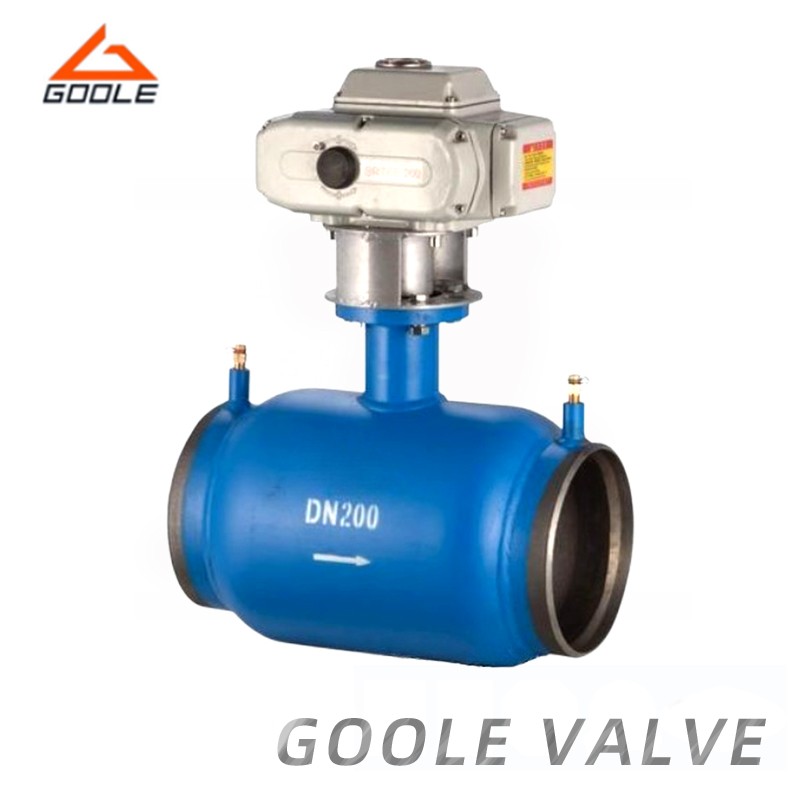
Choosing the wrong connection protocol permanently limits system scalability. It directly inflates future maintenance labor costs. Facility managers often select a connection type based on initial unit price rather than long-term utility. We must evaluate connections based on their specific features and operational outcomes.
Threaded connections and adapters are ideal for system modularity. Flexible hose systems often use threaded PVC models paired with threaded-to-hose adapters. Commercial pools rely heavily on this exact setup. It allows rapid, non-destructive replacement. You never have to cut hard pipes when a Ball Valve requires swapping.
Flanged connections demand high initial capital expenditure (CAPEX). However, they yield the lowest maintenance TCO over time. You can unbolt and remove flanged units directly from the line. They are absolutely critical for continuous-process industrial pipelines. Solvent welded or glued connections provide a permanent, low-cost seal. They offer zero scalability if you expect future pipeline reconfiguration.
Connection Type | Modularity / Scalability | Maintenance TCO | Best Application Scenario |
|---|---|---|---|
Threaded & Adapters | High | Medium | Flexible hose systems, commercial pools |
Flanged | Maximum | Low | Industrial continuous-process pipelines |
Solvent Welded (Glued) | Zero | High (Requires pipe cutting) | Permanent PVC agricultural or residential lines |
Compliance and design verification must occur before anyone cuts a pipe. Confirm component material compatibility first. You must calculate and allow for media thermal expansion. Verify strict adherence to ASME B31 piping standard frameworks. Designing the system correctly prevents catastrophic blowout events.
Poor alignment causes immediate cross-threading. It introduces severe pipeline stress directly to the main body. This mechanical stress easily leads to invisible micro-fractures. Those fractures expand under pressure and cause sudden leaks.
Stem placement dictates operational lifespan. The stem must point upwards or horizontally. Upside-down installations act as a trap for particulate matter. Gravity pulls dirt directly into the mechanism. Debris rapidly destroys the delicate stem seal. Never install these units upside down.
Flow directionality depends on the specific internal design. Standard two-way designs are bi-directional. Fluid can enter from either port safely. V-port models dictate a strict single flow direction. You must refer to the directional arrows cast into the body. Reversing flow on a V-port ruins control accuracy.
Support infrastructure prevents mechanical stress failures. The unit itself must never bear the dead weight of the piping system. Independent pipe hangers are mandatory. Place supports securely on both sides of the installation point. They mitigate structural stress and protect internal seals.
Follow exact procedural steps for threaded metal or PVC systems. Precision here prevents microscopic leak paths.
Preparation: Deburr and clear all port threads completely. Apply high-quality PTFE tape. Use exactly 2 to 3 wraps. Wrap strictly in a clockwise direction. Alternatively, apply industrial liquid thread sealant evenly.
The Two-Wrench Method: This mitigates severe risk. For two-piece designs, place one smooth-jawed wrench on the end closest to the joint. Place the second wrench on the connecting pipe. Never torque across the central body. Torque transmission warps internal components permanently.
Torque Standards: Hand-tighten the joint first. For pipes 1" or smaller, wrench 1.5 to 3 additional turns. For pipes 1.25" or larger, apply 1 to 2.5 turns. You should target 3.5 to 6 threads of total engagement.
Final Alignment: Do not over-tighten. Never back off or loosen the joint just to align the handle. Backing off instantly breaks the thread seal.
Glued connections rely on chemical reactions. Rushing this process guarantees joint failure.
Clean all surfaces aggressively. Apply a dedicated PVC primer. The primer softens the polymer structure. Next, apply an even coat of high-viscosity PVC cement. Insert the pipe using a slight twisting motion. The twist distributes the solvent uniformly across the gap.
You must follow the manual holding rule. Manually hold the joint under pressure for 30 to 60 seconds. PVC joints naturally try to "back out" while the solvent reacts. Releasing pressure too early pushes the pipe outward. Always follow manufacturer curing times before you attempt pressurization.
Flanged installations require strict load distribution. Inspect flange faces for any scoring or damage. Center the appropriate specification gasket perfectly between the faces.
Insert all bolts hand-tight initially. Use a properly calibrated torque wrench. You must follow a strict crisscross or star pattern. Tighten opposite bolts in alternating sequence. This methodology guarantees even load distribution. It strongly prevents sudden gasket blow-outs under high pressure.
Initial pressurization requires immense patience. Open the water or media supply incrementally. Rapid pressurization can unseat freshly cured joints. It can also dislodge seated gaskets. Watch the joints closely as pressure builds.
Perform an actuation verification test. Cycle the handle exactly 90 degrees. Parallel orientation means the line is open. Perpendicular orientation means the line is closed. Ensure no internal binding or grinding occurs during rotation.
You must avoid specific operational failure mechanics. Train your team to recognize these operational risks immediately:
Water Hammer: Never snap a unit shut quickly. Fast closure creates a massive concussive shockwave. This hydraulic shock can shatter PVC joints instantly. It can easily rupture forged metal fittings. Always operate the handle slowly.
Seat Deformity: These mechanisms are engineered for ON/OFF isolation. They are not designed for flow throttling. Leaving the unit partially open exposes the delicate PTFE seats to uneven pressure. Flow erosion degrades the seats rapidly. This causes permanent internal leaks.
Consistent cycling discipline extends hardware life. These mechanisms require periodic actuation. Cycle them from open to closed regularly. Stagnation allows mineral buildup to accumulate on the inner sphere. This calcification eventually seizes the mechanism entirely.
Address minor leaks proactively. If a small drip develops at the stem, do not immediately replace the whole unit. You can usually tighten the packing nut. Turn it clockwise using strict 1/8-turn increments. Stop turning the exact moment the leak stops. Over-tightening crushes the packing material.
Never ignore safety warnings regarding maintenance. Never attempt to repack or disassemble a two-piece Ball Valve under active system pressure. Shut down the system completely. Drain the lines before applying any tools to the valve body. Disassembling pressurized equipment causes fatal workplace injuries.
Symptom / Issue | Probable Cause | Recommended Action |
|---|---|---|
Leak at the stem | Worn stem packing seal | Tighten packing nut clockwise in 1/8-turn increments. |
Handle is difficult to turn | Mineral buildup or seized internal ball | Isolate line, depressurize, and clean. Increase periodic cycling. |
Internal leak when closed | Deformed PTFE seat from throttling | Replace entire unit. Stop using for flow control. |
Threaded joint leaking | Backed off to align handle, or cross-threaded | Remove entirely, clean threads, reapply PTFE tape, reinstall. |
Audit your current piping schematics carefully. Finalize the required connection type—Threaded, Flanged, or Solvent—based on your modularity needs. Procure units rated accurately for your specific chemical media and anticipated pressure loads.
Ensure installation crews are equipped properly. They must carry dual smooth-jawed wrenches and calibrated torque tools. Establish strict operational guidelines. Prohibit rapid handle actuation to eliminate water hammer risks. Enforce regular maintenance cycling to prevent mineral seizure. Taking these decisive actions today guarantees a leak-free, long-lasting industrial plumbing infrastructure.
A: Yes. Vertical runs are standard, provided the flow direction (if directional) is respected and the valve does not bear the unsupported weight of the vertical pipe column.
A: For systems requiring maintenance (like above-ground pools), avoid glue or clamps directly on the valve. Use a threaded PVC ball valve with threaded-to-hose adapters. This modular approach allows for rapid hose replacement without cutting hard-plumbed infrastructure.
A: Never back off (loosen) a threaded connection to align the handle. This breaks the seal. You must completely remove the valve, clean the threads, reapply PTFE tape/sealant, and reinstall.


