
Views: 0 Author: Site Editor Publish Time: 2026-04-12 Origin: Site


At first glance, a basic quarter-turn mechanism seems incredibly simple. You rotate a lever, and fluid either flows continuously or stops immediately. Yet, selecting the right internal configuration dictates whether your system achieves zero-leakage longevity or suffers premature failure. Engineers frequently encounter severe seat erosion, unexpected pressure drops, and structural leaks. These issues usually stem from a fundamental mismatch between valve components and system demands. Understanding these variations guarantees better operational safety and efficiency.
In this guide, we will deconstruct exactly how these components operate under extreme pressure. We will evaluate the Total Cost of Ownership (TCO) across various housing designs. Finally, you will discover an evidence-based framework to choose the optimal Ball Valve for your specific fluid dynamics, maintenance capabilities, and automation goals. You can stop guessing and start specifying components based on verified mechanical principles.
Rotary Isolation: Ball valves utilize a 90-degree rotary mechanism for rapid, tight shut-off, outperforming gate valves in high-cycle environments.
Maintenance vs. Cost: Housing designs (1-piece, 2-piece, 3-piece) directly dictate the trade-off between upfront procurement costs and long-term maintenance accessibility (inline repairability).
Pressure Management: Floating ball mechanisms rely on downstream pressure for sealing, while trunnion-mounted designs anchor the ball to manage extreme pressures without excessive torque.
Operational Risks: The fast-acting nature of ball valves requires mechanical mitigations (like gearboxes) to prevent severe water hammer in large-diameter piping.
Throttling Limits: Standard ball valves are designed for strictly on/off operation; using them for flow modulation causes rapid seat degradation unless specialized "V-port" configurations are utilized.
Every standard ball mechanism relies on a precise 90-degree stem rotation. You turn the actuator, and the internal ball pivots. This movement aligns the hollow bore directly along the pipeline to permit flow. Conversely, a perpendicular turn misaligns the bore. The solid side of the sphere blocks the fluid path completely. This quarter-turn action ensures immediate isolation. It requires far less physical effort than a multi-turn gate mechanism.
Understanding a Ball Valve requires breaking down its internal architecture. Each part plays a critical role in maintaining pressure boundaries.
The Ball: This is the rotary closure element. It features a hollow center. Fluid passes through this opening when activated.
Seats: These are circular rings situated around the ball. They consist of soft polymers or hardened metals. Seats provide the primary seal. They manage intense friction dynamics during opening and closing cycles.
Stem & Packing: The stem connects the external handle to the internal ball. Packing materials wrap around the stem to prevent external leaks.
Safety dictates using a "blowout-proof stem" design. Engineers insert these stems from the inside out. They feature an integral shoulder collar. High pipeline pressure pushes the stem upward against the body. It cannot eject outward. This mechanical safeguard prevents catastrophic fluid release and serious operator injury.
You must strictly use standard rotary designs for isolation. They handle on/off duties perfectly. They fail miserably when used for flow control. If you leave the sphere partially open, you expose the soft seats directly to high-velocity flow. This creates fluid velocity spikes. It triggers cavitation phenomena. Vapor bubbles form and collapse violently against the housing. This process causes severe, uneven seat erosion. Eventually, the component loses its ability to seal entirely.
You face a crucial decision when specifying housing designs. You must balance upfront procurement costs against long-term maintenance accessibility. The industry divides these housings into three distinct categories.
A single solid cast body defines the 1-piece design. Manufacturers insert the internal trim through the ends. This insertion limit forces the use of a reduced port. You pay the absolute lowest initial cost. However, you cannot repair it. It functions as a disposable, throwaway asset. You should install them in low-pressure, non-critical systems. They make sense only when replacing the entire unit costs less than system downtime.
This design splits the housing into two distinct parts. Technicians bolt or thread these pieces together. The 2-piece configuration remains the undisputed standard for high-pressure applications. It accommodates full-port requirements easily. Evaluate the Total Cost of Ownership carefully here. Replacing worn seats requires a complete pipeline shutdown. You must physically remove the entire unit from the piping network to perform maintenance.
You will find two end caps and a central body segment here. It carries the highest upfront cost. Surprisingly, it offers the lowest lifecycle maintenance cost. Technicians simply unbolt the center section. They extract it to clean the interior or replace components. They never have to cut the end caps out of the pipeline. You will find this design essential for sanitary environments, such as FDA-regulated pharmaceutical plants. It dominates high-wear industrial applications.
Configuration | Upfront Cost | Maintenance Capability | Bore Size Limit | Ideal Use Case |
|---|---|---|---|---|
1-Piece | Lowest | Unrepairable (Disposable) | Reduced Port Only | Low-pressure utility lines, non-critical water systems. |
2-Piece | Moderate | Requires Full Removal | Full Port / Standard Port | High-pressure industrial systems, chemical processing. |
3-Piece | Highest | Inline Repairable | Full Port / Standard Port | Sanitary applications, high-wear pipelines, FDA compliance. |
Your system pressure dictates how the internal sphere must anchor itself. Misjudging this mechanic destroys soft seats rapidly.
Floating Ball: This mechanism leaves the sphere unanchored at the bottom. Upstream fluid pressure pushes the ball physically downstream. It presses hard into the downstream seat to create a tight seal. This works flawlessly for smaller lines. However, it fails in large-diameter or extreme-pressure scenarios. The fluid exerts immense force on the sphere. Friction between the metal and the soft seat skyrockets. The actuator becomes excessively difficult to turn. It will eventually crush the polymer rings.
Trunnion-Mounted: Engineers use mechanical anchoring at the top and bottom to secure the ball. These trunnion pins absorb the immense pipeline thrust. The sphere rotates cleanly without shifting downstream. The seats feature built-in springs. They push against the anchored sphere to maintain the seal. You must specify trunnion designs for high-pressure applications exceeding 40 bar. They maintain a consistently low operating torque. They actively prevent seat crushing and ensure operational longevity.
You can optimize system efficiency by selecting the correct bore size. This choice directly impacts fluid velocity and material expenditure.
Full Bore (Full Port): The internal flow path perfectly matches the inner diameter of the pipeline. It offers zero restriction. Fluid passes through without velocity changes or pressure drops. You must specify full bore designs for pipelines requiring regular "pigging" (mechanical cleaning devices sent through the pipe).
Reduced Bore (Standard Port): The internal flow path shrinks by one pipe size. It forces fluid through a smaller bottleneck. This causes a localized velocity increase and a noticeable pressure drop. You can accept this compromise in general utility lines. It saves significant material costs where slight flow restrictions do not harm system efficiency.
Physical effort becomes a severe limiting factor. Large trunnion models require immense torque to cycle. Relying on manual levers introduces human error during emergency shutoffs. Operators might turn them too slowly or too aggressively. You should always specify an "ISO 5211 mounting pad" on your manual purchases. This standardized flange sits beneath the handle. It future-proofs your installation. It allows technicians to bolt on automated actuators later without replacing the entire unit.
Air-driven systems dominate hazardous industrial environments. They utilize clever internal mechanics.
Mechanics: They rely on rack-and-pinion gear systems. Compressed air enters a cylinder. It pushes pistons outward. The linear motion of the pistons spins a central pinion gear. This converts air pressure directly into rapid rotary motion.
Evaluation: Pneumatic systems respond in milliseconds. They provide intrinsic failsafe capabilities via internal return springs. They are completely spark-free. This makes them perfectly safe for explosive oil and gas environments. However, they strictly require an existing, reliable compressed air infrastructure to function.
Electric motors offer unparalleled control precision when compressed air is unavailable.
Mechanics: They utilize compact, motor-driven gearboxes. The motor spins rapidly, and the internal gears step down the speed while multiplying the torque output.
Evaluation: These units feature significantly slower response times compared to pneumatic options. This actually serves as a massive benefit. The delayed movement naturally mitigates destructive water hammer. They offer precise feedback loops. You will find them ideal for remote pumping stations, complex HVAC networks, and any facility lacking pneumatic lines.
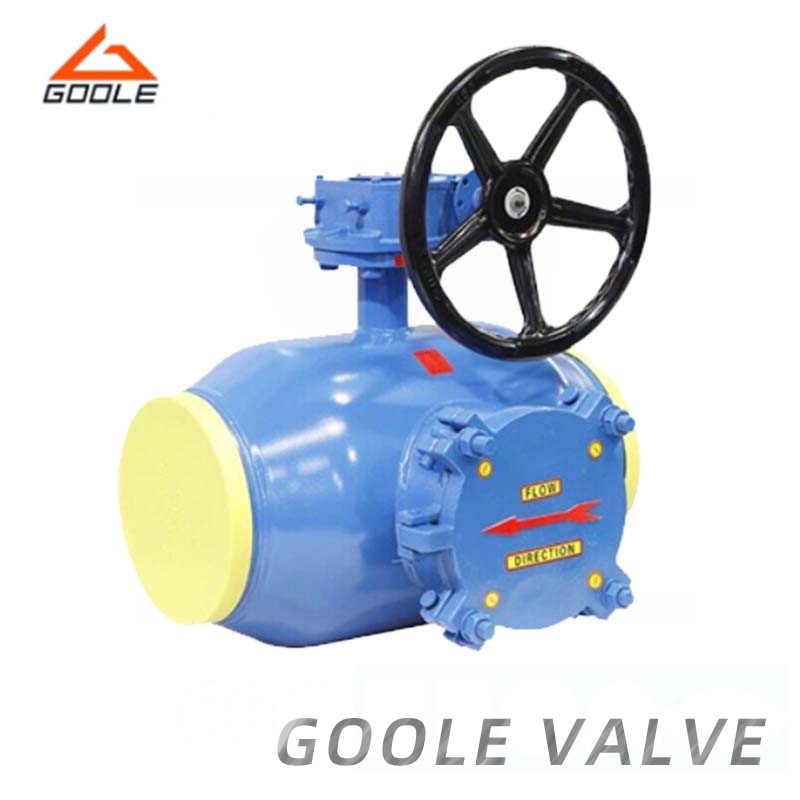
Fast-closing mechanisms generate severe hydraulic shock. This phenomenon is known as water hammer. Fluid carries tremendous kinetic energy. Stopping it instantly creates a high-pressure shockwave. This wave bounces backward through the piping. It shatters joints, bursts gaskets, and destroys instrumentation. You must implement mechanical mitigations. We recommend sizing specialized gearboxes for any Ball Valve exceeding 4 inches in diameter. These gearboxes artificially delay the closure times. They force the operator to turn a handwheel multiple times, ensuring a gradual, safe fluid deceleration.
Operators must respect the mechanical shearing power of these devices. A metal sphere closing past a stationary seat acts like an industrial guillotine. It easily shears off debris trapped in the pipeline. It possesses more than enough force to sever human fingers. Maintenance teams must follow strict lockout/tagout (LOTO) procedures. Never reach into an exposed bore unless the system is fully depressurized and locked open.
Specifying the wrong materials guarantees premature corrosion or toxic contamination.
Metals: Standard brass works for clean water. However, it suffers from dezincification in highly chlorinated environments. The chlorine strips the zinc away, leaving a brittle, porous copper shell. You should upgrade to 316 Stainless Steel. It contains added molybdenum. This dramatically increases resistance to chloride-induced pitting.
Polymers & Seats: Standard PTFE (Teflon) handles most chemical duties perfectly. It deforms under excessive heat. If your process exceeds 100°C, you must upgrade to reinforced variants. Glass-Filled Polypropylene (GFPP) extends structural stability up to 150°C.
Sanitary Limits: Fluid often sneaks into the empty cavity between the sphere and the housing wall. It stagnates there. Bacteria multiply rapidly in these dead zones. Food and beverage industries prevent this by specifying cavity-filler seats. These specialized PTFE extensions physically occupy the empty spaces. They ensure a flush, cleanable internal environment.
Your success depends entirely on aligning structural variations with system realities. All rotary mechanisms operate on the same core quarter-turn principle. Yet, their performance drastically diverges based on housing design, seating mechanics, and bore sizing. You maximize your Return on Investment (ROI) by avoiding improper applications. Throwaway single-piece units save money upfront but punish you during failures. High-end trunnion models cost more initially but prevent catastrophic seat crushing under extreme pressure.
Take specific actions before making your next procurement decision:
Audit your existing pipeline flow rates to determine if you actually need a full port design.
Identify the maximum potential system pressure to choose safely between floating and trunnion mounts.
Evaluate your internal maintenance capabilities. If pipeline shutdowns are impossible, prioritize 3-piece inline-repairable models.
Assess your automation roadmap. Always request an ISO 5211 mounting pad for future pneumatic or electric actuator upgrades.
A: Standard models strictly serve isolation purposes. Throttling causes localized high-velocity flow. This dynamic creates cavitation and rapid, uneven seat wear. The component will eventually fail to close tightly. Only specialized V-port or characterized designs should be utilized for proportional flow control. They use precisely cut openings to manage flow steadily.
A: Ball valves operate on a rapid quarter-turn mechanism. They offer tighter seals and boast immense durability for frequent cycling. Gate valves require multiple turns of a handwheel to lift an internal gate. They are highly prone to wear if cycled frequently. They remain best suited for infrequent, slow-moving isolation duties.
A: Excessive friction usually stems from three main issues. First, media buildup can solidify in the internal cavity. Second, prolonged inactivity can cause the soft polymer seat to chemically bond to the metal sphere. Third, excessive downstream pressure might overwhelm a floating design, creating massive physical friction against the seat.
A: It describes a critical internal mechanical design. Engineers insert the stem from the inside out, featuring a wider shoulder collar at its base. High pipeline pressure physically pushes the stem upward into the housing. This mechanism ensures internal forces cannot eject the stem outward, preventing catastrophic fluid leaks and operator injuries.


