
Views: 0 Author: Site Editor Publish Time: 2025-11-20 Origin: Site


In industrial fluid control systems, valves play a crucial role in managing the flow of liquids, gases, or slurries. These valves ensure that systems operate efficiently, safely, and reliably, directing fluid in the required direction and allowing for precise control. While traditional valves, such as two-way and three-way valves, have long been the standard, four-way ball valves are increasingly gaining popularity in various industrial sectors due to their versatility, efficiency, and ease of use.
In this article, we will explore the advantages of using four-way ball valves over traditional valve types. By understanding their unique features and benefits, industries can make more informed decisions about fluid control and optimize system performance.
A four-way ball valve is a specialized valve that has four ports and can control the direction of fluid flow between multiple outlets or inlets. It operates using a ball inside the valve body that has four different channels or ports. When the valve is rotated, the ball directs the flow of fluid from one port to another. This simple yet effective design makes it a highly versatile option for complex fluid systems.
Unlike traditional two-way ball valves, which can only control flow in one direction (either on or off), a four-way ball valve allows for more complex flow management. These valves can switch between multiple flow paths, enabling a system to change the direction of fluid or distribute it to different parts of the system as needed.
Traditional valves, such as two-way ball valves, gate valves, or globe valves, have a limited range of operation. Two-way ball valves, for example, can either allow or block the flow of fluid between two points, offering simple on/off control. Similarly, other traditional valves have limited capabilities when it comes to directing flow between more than two outlets.
In contrast, four-way ball valves are designed with four ports, providing the ability to control fluid flow in multiple directions. This gives industries greater flexibility and control over fluid management, making four-way ball valves a popular choice for more complex and dynamic systems.
One of the primary advantages of using a four-way ball valve is its versatility in fluid control. Unlike traditional two-way valves that are limited to a single flow path, a four-way valve can handle multiple flow routes, enabling the redirection, mixing, or diversion of fluid as required.
For example, a four-way ball valve can manage the flow between several pumps, tanks, or reactors in a chemical plant, providing the ability to switch between flow paths or distribute fluid to multiple outlets. This versatility is especially useful in complex systems that require the switching of fluid flow for various processes, such as cooling, mixing, or bypassing.
Four-way ball valves offer greater flexibility compared to traditional valves, particularly in systems that require frequent changes in fluid direction. In industries such as pneumatics, hydraulics, and water treatment, where fluid flow may need to be redirected or alternated between different pathways, a four-way valve can perform these tasks efficiently without the need for multiple valves.
For example, in a pneumatic system used to control cylinders, a four-way valve can quickly switch between extending and retracting the cylinder, directing airflow to different parts of the system as needed. In contrast, using traditional two-way valves for this purpose would require multiple valves and more complex control systems, making the setup less efficient.
Another significant benefit of four-way ball valves is that they can simplify system design by reducing the number of required components. In a complex fluid control system, using multiple two-way or three-way valves to direct flow can result in a cluttered system with more piping, fittings, and valves to manage. A four-way ball valve eliminates this complexity by consolidating several flow paths into a single, more compact valve.
By using a four-way valve, you can save space, reduce the need for additional components, and streamline the piping layout. This simplification can lower installation and maintenance costs while improving the overall reliability of the system.
While four-way ball valves may have a higher initial cost than traditional valves, they can lead to significant cost savings in the long run. The ability to combine multiple flow paths into one valve reduces the need for additional valves, piping, and installation labor. Fewer components also mean less maintenance and fewer potential failure points in the system, which helps reduce ongoing operational costs.
Moreover, because four-way ball valves are designed for quick and easy actuation (either manually or via automated control), they can enhance system performance and efficiency, further contributing to cost savings.
A major concern in fluid control systems, especially in high-pressure environments, is preventing leaks and ensuring the safety of operations. Four-way ball valves are designed to provide tight seals, preventing fluid from leaking when the valve is closed. This helps maintain system pressure and reduces the risk of spills or hazardous leaks.
Because four-way ball valves are relatively simple in design compared to other types of valves, such as diaphragm or spool valves, there are fewer potential failure points that could result in leaks or other safety issues. Additionally, four-way ball valves can be equipped with advanced sealing materials, ensuring excellent leak-proof performance even under extreme pressure or temperature conditions.
Four-way ball valves are known for their durability and long lifespan. The ball mechanism inside the valve is designed to withstand repeated use and harsh conditions, including high temperatures, pressure, and aggressive chemicals. This makes four-way ball valves particularly suited for demanding environments like the oil and gas industry, chemical plants, and manufacturing facilities.
Traditional valves, such as gate valves or globe valves, often have more moving parts and more complex sealing mechanisms, which can wear out more quickly. In contrast, the simplicity of the ball valve mechanism ensures that it is both long-lasting and easy to maintain, resulting in lower replacement costs and fewer system shutdowns.
Four-way ball valves are generally easy to operate and require less maintenance than traditional valves. The ball inside the valve rotates smoothly, providing precise control over fluid flow. In most cases, these valves are designed to be operated manually or automatically, depending on the application. This ease of operation makes them an ideal choice for industries that require rapid response and high uptime.
In terms of maintenance, four-way ball valves are relatively simple to inspect and repair. The absence of complex parts and seals makes it easier to diagnose and fix any issues that arise. Additionally, the valve’s durability reduces the need for frequent maintenance, further lowering overall costs.
Compared to traditional multi-valve systems, four-way ball valves offer a more compact design, making them a space-efficient solution for fluid control in confined spaces. This is particularly important in industries where equipment and machinery must be installed in tight quarters, such as in marine, aerospace, or mobile applications.
The compact design of four-way ball valves reduces the amount of space required for installation, freeing up valuable room for other components or equipment. This space efficiency is a major advantage when designing complex systems with limited available space.
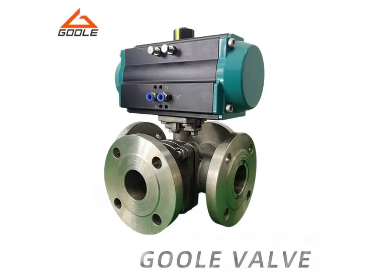
Four-way ball valves are used in a wide variety of industries and applications where fluid flow needs to be redirected, mixed, or switched between different outlets. Some common applications include:
Pneumatic systems: To control the direction of airflow in actuators, cylinders, and pneumatic machinery.
Hydraulic systems: To control the flow of hydraulic fluid and direct it to different parts of machinery or equipment.
Chemical processing: For mixing or diverting chemicals in process pipelines or reactors.
Water treatment plants: To direct water between different filtration or treatment tanks.
Oil and gas: To manage fluid flow in pipelines, separators, and processing units.
In summary, four-way ball valves offer numerous advantages over traditional valve types, including versatility, system flexibility, and cost savings. Their ability to control multiple flow paths, simplify system design, and provide improved safety and durability makes them an ideal choice for industries that require efficient fluid management.
Whether in pneumatic systems, chemical processing, or hydraulic systems, the use of four-way ball valves allows for more streamlined operations, reduced maintenance costs, and enhanced system reliability. By choosing four-way ball valves over traditional valve types, industries can optimize their fluid control processes, improve performance, and ensure long-term operational success.


