
Views: 0 Author: Site Editor Publish Time: 2025-11-18 Origin: Site


In industrial fluid control systems, managing the flow of liquids, gases, or slurries with precision and reliability is essential for maintaining system efficiency, safety, and performance. Whether it's in a chemical plant, oil refinery, water treatment facility, or manufacturing plant, fluid control is at the heart of many critical processes. One of the most versatile and effective solutions for fluid control in complex systems is the four-way ball valve. This valve type offers several advantages over traditional valve configurations, providing a simple yet highly effective solution for directing, redirecting, and regulating fluid flow.
In this article, we will explore how four-way ball valves work, their role in improving fluid control in complex systems, and why they are such a valuable tool in a wide variety of industries. Whether you're working with pneumatic, hydraulic, or process control systems, understanding the benefits of four-way ball valves can help you optimize system performance and enhance operational efficiency.
A four-way ball valve is a type of valve that controls the direction of fluid flow through a system using a ball with four ports. The ball inside the valve has a hole or series of channels that can be rotated to align with different ports, thereby directing the flow of fluid to one or more outputs. Unlike standard two-way ball valves, which only control flow in one direction (either on or off), four-way ball valves can direct flow in multiple directions, making them ideal for more complex systems that require directional control.
The basic structure of a four-way ball valve includes:
Four Ports: These ports allow the valve to direct fluid from one inlet port to multiple outlet ports or vice versa. These ports are typically arranged in an "L" or "T" shape.
Rotating Ball Mechanism: The ball inside the valve has ports aligned in specific patterns. As the ball rotates, it directs the fluid from one port to another. This rotation allows for different flow paths, giving the valve its four-way functionality.
Sealing Mechanism: When the valve is closed, the ball forms a tight seal to prevent any fluid leakage, which is crucial for maintaining system pressure and ensuring leak-free operation.
Four-way ball valves are used to divert, mix, or isolate flows and are typically operated manually, pneumatically, or electrically depending on the application and required automation level.
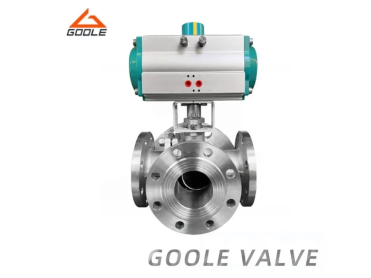
In complex fluid systems, there are often multiple pathways through which the fluid can be directed. Traditional valves, such as two-way ball valves, are limited to simple on/off control for fluid flow. A four-way ball valve, on the other hand, allows fluid to be routed in different directions, making it more suitable for systems with multiple flow requirements.
For example, in a pneumatic system, a four-way ball valve can be used to control the flow of air to two cylinders, alternating between two different paths depending on the system's requirements. This versatility ensures that fluid can be directed exactly where it is needed, whether it's to divert the flow, mix fluids, or isolate different sections of the system.
Four-way ball valves are particularly useful when systems require fluid to be routed from one inlet to multiple outlets or vice versa. This feature is important in applications such as process control, where fluid needs to be routed between different reactors, tanks, or piping systems. For instance, in a chemical processing plant, a four-way valve can switch between different reactor vessels, ensuring that fluid flow is directed to the correct chamber at the right time.
The ability to control fluid flow between multiple outlets helps reduce the need for additional valves and piping, simplifying system design and reducing overall costs. This results in fewer components to maintain and a more compact system layout.
One of the major advantages of four-way ball valves is their flexibility. By incorporating a four-way valve into a complex fluid control system, operators gain the ability to easily switch between different flow configurations. For example, a four-way ball valve can be used to alternate between flow paths or divert fluid to an alternative outlet for maintenance or system shutdowns. This adaptability is critical in industries where production needs to be highly responsive to changing requirements.
In HVAC systems, for example, four-way ball valves can alternate between heating and cooling functions by switching the flow of fluids through different channels. This flexibility makes them ideal for systems that require frequent changes in flow direction, like temperature control, fluid mixing, or bypass operations.
Efficiency is key in any industrial fluid control system. Four-way ball valves help improve system efficiency by minimizing the need for additional equipment and reducing the complexity of system operations. By allowing one valve to perform the work of several, these valves streamline fluid management, cutting down on the number of components involved.
Moreover, the ability to switch between flow paths quickly helps reduce downtime. For example, when a system needs to undergo maintenance, a four-way valve can divert fluid to an alternate route, ensuring that the process continues uninterrupted. This minimizes production delays, which is crucial in high-demand industries like manufacturing and chemical processing.
Since four-way ball valves can handle multiple flow paths, they help reduce the number of valves required in a system. This not only simplifies the design and operation of a system but also makes maintenance easier. Fewer components mean less wear and tear, and consequently, reduced repair costs and effort.
Additionally, four-way ball valves are known for their durability and low-maintenance requirements. With fewer moving parts and a simple design, they are easier to maintain and inspect compared to other types of complex directional control valves, like spool or diaphragm valves.
A key concern in any fluid control system is ensuring that leaks are minimized or prevented altogether. Four-way ball valves are designed with a tight sealing mechanism, which ensures that fluid only flows when the valve is open and remains securely contained when the valve is closed. This is particularly critical in high-pressure systems where even small leaks can lead to dangerous situations.
By maintaining a secure seal, four-way ball valves contribute to a safer working environment and help prevent hazardous leaks, reducing the risk of spills or accidents in the workplace.
Four-way ball valves are used in a wide range of industries and applications, where they help improve fluid control in complex systems. Some of the most common applications include:
In pneumatic systems, four-way ball valves are used to control the direction of compressed air flow, allowing the system to switch between different flow paths and actuators. These valves are essential for controlling cylinders, switches, and other pneumatic components.
Four-way ball valves are also employed in hydraulic systems to control the direction of hydraulic fluid flow to different parts of a machine or system. They are critical in controlling the operation of heavy machinery, lifting equipment, and construction vehicles.
In the chemical industry, four-way ball valves are used to divert or mix chemicals in process pipelines. The ability to direct fluid flow to multiple reactors or mixers enhances process control and flexibility.
In water treatment facilities, four-way ball valves can control the flow of water between various filtration and treatment tanks, ensuring proper sequencing and chemical dosing.
In the oil and gas industry, four-way ball valves are used to switch the flow of oil, gas, or water between different pipes, pumps, and separators. These valves help ensure the efficient operation of pipelines and drilling operations.
Four-way ball valves are a vital tool for improving fluid control in complex systems. With their ability to manage multiple flow paths, enhance system flexibility, and streamline maintenance, they offer significant advantages over traditional two-way valves. Whether you're working with pneumatic, hydraulic, or process control systems, integrating a four-way ball valve can help optimize system performance, reduce downtime, and improve overall efficiency.
By understanding the functionality of four-way ball valves and the many ways they can improve fluid control, you can make informed decisions that enhance your operations and contribute to the success of your system. As industries continue to evolve and require more flexible, efficient, and reliable fluid control solutions, four-way ball valves will remain an essential component in the design of complex fluid management systems.


