
Views: 0 Author: Site Editor Publish Time: 2026-08-11 Origin: Site


Have you ever witnessed a pipeline failure because a procurement team chose the wrong isolation mechanism? Improper valve selection leads to disastrous outcomes. You risk dangerous fugitive emissions, unexpected process downtime, and severely over-engineered budgets on large-diameter pipelines. Both options we examine today operate as quarter-turn rotary valves. Engineers primarily use them for system isolation. However, their internal mechanics dictate entirely different scalability limits and performance ceilings. You cannot simply swap one for the other without understanding the fluid physics involved.
We aim to provide a strict, specification-driven comparison. We will help engineers and procurement teams finalize shortlists based on pressure drops, face-to-face dimensions, and media compatibility. You will learn exactly where each valve thrives and fails. We will outline actionable steps to match mechanical limits to your real-world process requirements. Understanding these differences prevents catastrophic failures.
Performance Ceiling: The ball valve offers superior bubble-tight shutoff and handles high-pressure/high-temperature (HPHT) applications without restricting flow.
Scalability & Cost: Butterfly valves drastically reduce capital expenditure (CapEx) and footprint in large-diameter piping (typically >4 inches).
Flow Characteristics: Ball valves allow for "full port" unobstructed flow; butterfly valves leave the disc in the flow path, causing inherent pressure drops.
Maintenance Reality: Ball valves can trap media in the body cavity; butterfly valves require careful elastomer selection for the seat.
Understanding the fundamental geometry of these mechanisms is critical. The physical shape of the closing element directly dictates how it interacts with the surrounding fluid.
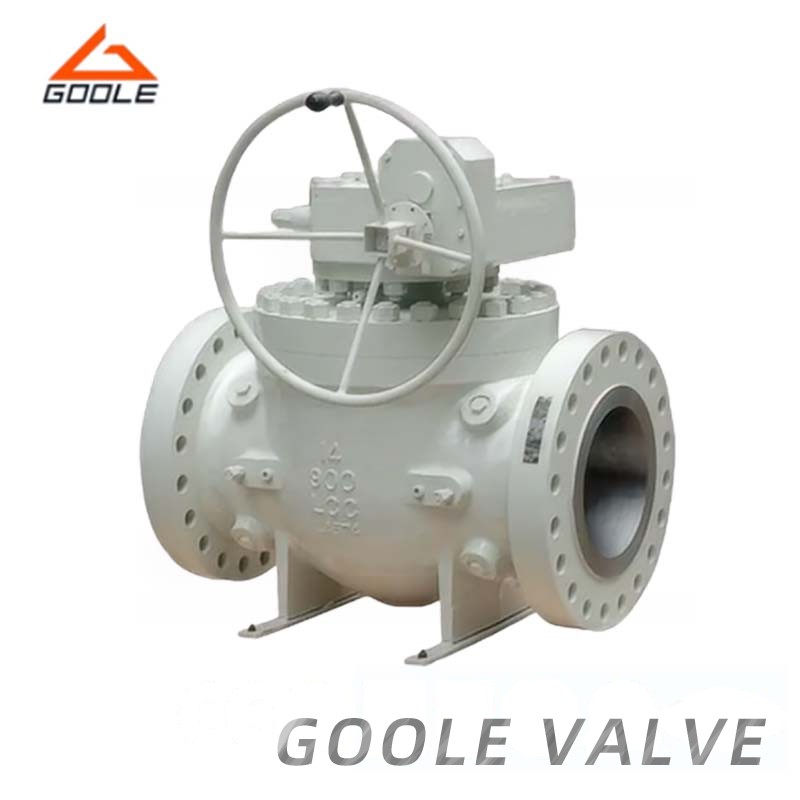
This design utilizes a hollow, perforated, pivoting sphere to control flow. When you turn the handle or fire the actuator ninety degrees, the sphere rotates. If you open the mechanism fully, the hollow bore aligns perfectly with the pipeline.
This creates a smooth, unobstructed flow path. Engineers refer to this as a "full port" configuration. The internal diameter of the Ball Valve matches the pipe exactly. However, this structural reality requires a bulky, heavy design. Manufacturers must build a massive outer housing. This thick housing accommodates the large sphere, the internal seating materials, and the heavy stem. Therefore, manufacturing requires significant amounts of cast or forged steel.
The alternative relies on a rotating disc mounted on a central stem. When you actuate the stem, the disc turns parallel to the flow direction. However, this flow path fundamentally differs from a hollow sphere.
The disc always remains in the media stream. It sits directly in the center of the pipe even when fully open. This structural reality permits a remarkably slim body. You will often see wafer-style or lug-style designs. These slim profiles result in a significantly shorter face-to-face dimension. You can easily sandwich this slim body between two standard pipe flanges. It uses a fraction of the metal required for heavier alternatives.
Evaluating performance requires looking past basic operation. You must analyze how each mechanism handles extreme fluid dynamics, intense pressures, and throttling demands.
Achieving a bubble-tight shutoff at high pressures separates standard equipment from high-performance gear. The Ball Valve naturally achieves a tighter seal at elevated pressures. In a floating design, the upstream media pressure actively pushes the sphere against the downstream seat. The harder the fluid pushes, the tighter the mechanical seal becomes.
Conversely, standard concentric butterfly valves face severe limitations here. They rely on an interference fit. The metal disc squeezes against a rubber seat. Extreme line pressure can easily distort the elastomer. It can push the rubber out of place or cause the seat to blow out entirely. They simply cannot sustain bubble-tight isolation under extreme upstream force.
Fluid turbulence creates invisible dangers inside piping systems. You must account for friction and pressure loss during system design.
Ball Valve advantage: Full port options deliver essentially zero pressure drop. The fluid does not know a mechanism is present. This uninterrupted path proves ideal for "pigging" the line. You can send mechanical cleaning devices straight through the pipe without hitting any obstructions.
Butterfly Valve risk: The stationary disc inherently causes turbulence. Fluid must split and rush around the metal plate. This creates a permanent pressure drop. You must calculate this flow resistance into your system pump sizing. Furthermore, high-velocity fluids rushing past the disc can trigger cavitation. Bubbles form and collapse rapidly, slowly destroying the internal metal surfaces.
System operators occasionally need to restrict flow rather than shut it off entirely. We must state clearly: neither option serves as an ideal precise throttling device. If you need continuous, precise control, you should install globe valves or specialized control valves.
However, butterfly designs do offer better mid-range throttling capabilities than standard hollow-sphere designs. You can crack the disc open slightly to modulate flow. Standard hollow spheres struggle here. High-velocity fluid hitting a partially open sphere will quickly erode the soft seats, ruining the shutoff capability.
Feature | Ball Valve | Standard Butterfly Valve |
|---|---|---|
Flow Path | Unobstructed (Full Port) | Obstructed (Disc in path) |
Pressure Drop | Near Zero | Moderate to High |
Face-to-Face Dimension | Long / Bulky | Short / Slim |
High-Pressure Sealing | Excellent (Pressure-assisted) | Poor (Prone to seat blowout) |
Line Pigging | Possible (Full port required) | Impossible |
Selecting this heavy-duty isolation mechanism comes with distinct advantages and notable implementation risks. Engineers must weigh these carefully.
When you demand maximum reliability, this design delivers exceptional high-pressure and high-temperature tolerance. You can upgrade them with specialized metal seats for extreme refinery conditions. They easily handle abrasive or extremely hot media.
The unobstructed flow path directly reduces pump energy costs. Pumps do not need to work harder to push fluid past internal obstructions. Furthermore, they remain highly reliable for critical shut-off applications. You will frequently see them used for hazardous gas lines or toxic chemical isolation where leakage is strictly prohibited.
Weight and footprint pose massive challenges. The design becomes prohibitively heavy in line sizes over six inches. A massive twelve-inch unit requires heavy cranes for installation and extensive structural piping support to prevent pipe sagging.
Cavity trapping presents another serious danger. Fluid can easily become trapped between the sphere and the outer body when closed. If this trapped liquid freezes, or if thermal expansion occurs, the internal pressure can crack the metal body. You must specify specialized cavity relief designs to prevent explosions.
Finally, they require a much higher capital expenditure (CapEx). Precision machining a perfect sphere and casting a massive body costs significantly more money to manufacture.
Lighter industrial processes often favor slim-profile designs. They solve major logistical problems but introduce mechanical limits.
Economic scalability defines this category. They remain drastically cheaper for large-volume water distribution, commercial HVAC systems, and low-pressure chemical lines. You save immense amounts of procurement budget as pipe diameters increase.
They offer incredibly compact installation. The slim body fits neatly into tight spaces between existing pipe flanges. This lightweight design requires significantly less structural piping support. You save money on scaffolding and brackets.
They also feature fast actuation. They require less operational torque in lower-pressure environments. You can install smaller, cheaper pneumatic or electric actuators to turn the stem. This further reduces system build costs.
Flow obstruction represents a major limitation. You absolutely cannot use them in lines that require mechanical cleaning or pigging. The central disc will block any cleaning tool, potentially causing a dangerous pipe blockage.
Wear and tear occurs rapidly in harsh environments. If your media contains suspended solids or abrasive slurries, the fluid will rapidly erode the leading edge of the disc. It will also tear apart the elastomer seat. This internal damage inevitably leads to bypass leakage, forcing a system shutdown for replacement.
We must address the gray area in modern valve specification. Standard rubber-lined concentric designs are not your only slim-profile option today. Engineering advancements have blurred the lines between these categories.
Double and triple offset technology revolutionized the industry. Engineers designed a way to move the stem out of the center of the pipe. They shifted the rotational axis slightly away from the disc center. In a Triple Offset Valve (TOV), they also machine a specialized conical seat geometry. The disc swings into place like a door closing into a frame. It does not drag across a rubber seat.
This allows TOVs to handle high pressures and extreme temperatures using a pure metal-to-metal seal. They achieve bubble-tight shutoff without the fragile rubber components. You should frame the Triple Offset design as a direct, weight-saving competitor to the heavy-duty metal-seated Ball Valve. Engineers frequently shortlist TOVs for offshore platforms or dense refinery applications where weight savings directly equal structural safety.
Procurement teams and piping engineers need strict, repeatable logic. Do not guess. Follow this exact evaluation checklist to match equipment to your process realities.
Step 1: Assess Line Size & Budget. Look at the pipe diameter. If the pipe exceeds six inches in diameter and the internal pressure remains low, default immediately to a slim-profile disc design. You will save massive amounts of budget.
Step 2: Assess Media. Evaluate what flows through the pipe. If the media constitutes a thick, abrasive slurry, or if maintenance requires mechanical line pigging, you must mandate a full-port hollow-sphere design. A disc will fail or block the pig.
Step 3: Assess Pressure/Temperature. Determine the safety threshold. For strict zero-leakage requirements in dangerous, high-pressure gas lines, you must specify a trunnion-mounted design. Do not risk a blowout.
Step 4: Assess Installation Space. Measure the physical environment. If weight limits are strict, or if the flange-to-flange space is highly restricted, you should utilize a high-performance or triple-offset disc design to save room.
Neither isolation mechanism is objectively "better" than the other. Success stems entirely from matching mechanical limits to process realities. You must respect the physics of your pipeline. Heavy-duty sphere designs provide unmatched sealing security and flow efficiency, but they penalize you heavily in weight and upfront cost. Slim-profile disc designs save immense amounts of space and money, but they introduce flow restrictions and pressure limits.
We urge buyers to consult exact flow coefficient (Cv) charts before purchasing. You should thoroughly calculate pump energy lost to pressure drops before finalizing the spec sheet. Choosing a cheaper component might cost you drastically more in electrical pumping power over a decade. Always evaluate the long-term impact on your system hydraulics.
If you remain unsure about your specific application, do not guess. Contact our technical sales team today. You can request a comprehensive specification review or download our detailed engineering selection matrix to secure your pipeline infrastructure.
A: Yes, you can replace one in large-diameter, low-pressure liquid systems. If your process accepts slight pressure drops and you face strict space or budget constraints, they serve as excellent replacements. However, you cannot substitute them in systems requiring mechanical pigging or high-pressure gas isolation.
A: Both operate as quarter-turn mechanisms and actuate very quickly. However, butterfly designs often require less torque in low-pressure settings. This lower torque requirement allows smaller actuators to turn the stem faster, slightly speeding up the overall actuation cycle.
A: They require significantly more raw material to forge the bulky outer body. Furthermore, manufacturers must use precise machining to create the perfect spherical internal component. The complex multi-piece assembly process and robust seating materials also drive up the initial manufacturing costs.
A: Standard concentric rubber-lined models are not suitable for high-pressure gas. They risk seat blowout and dangerous leakage. High-pressure gas isolation strictly requires either a heavy-duty trunnion-mounted sphere mechanism or a specialized triple offset metal-seated design to ensure zero fugitive emissions.


