
Views: 0 Author: Site Editor Publish Time: 2026-03-13 Origin: Site


Pressure spikes can punish valves fast, so why do some still turn smoothly? A Trunnion Ball Valve stays stable because the ball is fixed, and the seats move to seal as pressure rises. That design helps keep torque predictable and shutoff reliable in demanding lines. In this guide, we explain the force path step by step. You’ll see how seat springs and pressure energization work together. You’ll also learn what to check for selection, actuation, and safe operation.
A Trunnion Ball Valve is a quarter-turn valve. The ball has a bore through its center. When that bore aligns with the pipeline, flow passes through. When the stem turns the ball 90 degrees, the bore turns away from the flow path and the solid ball surface blocks the line. This looks simple from outside, but inside it is a controlled sealing event. The sealing happens at the interface between the ball surface and the seat rings, not inside the bore. Because rotation is short and repeatable, it fits isolation duties well and pairs naturally with actuators. In practice, this 90-degree motion is the “switch” that changes from full flow to tight shutoff.
In a Trunnion Ball Valve, the ball does not float downstream when pressure rises. It is supported at two points: the stem supports the top of the ball and a lower trunnion supports the bottom. Those supports carry most of the pressure-generated loads and transmit them into the valve body. This matters most under high differential pressure, where an unsupported ball would tend to shift and wedge into a seat. Here, the ball stays centered and aligned, so sealing force does not depend on ball movement. The result is steadier operation, more predictable alignment, and reduced stress on sealing areas. Bearings often support the stem and trunnion journals, which helps the ball rotate smoothly even when the valve is large or heavily loaded.
A Trunnion Ball Valve seals by allowing the seats to move slightly toward the fixed ball. This is the key behavioral difference many buyers miss. Instead of pressure pushing the ball into a seat, the design allows the seat assembly to travel a small distance so it can “follow” the ball surface and create consistent contact. This seat movement is controlled and limited, but it is enough to maintain a reliable sealing line even as pressure and temperature change. Because the ball stays fixed, the sealing geometry stays stable and contact becomes more uniform. That improves repeatability across cycles and helps the valve maintain shutoff performance without relying on ball displacement. In B2B terms, it is a more controlled sealing system that scales better for high pressure and large bore service.
Sealing in a Trunnion Ball Valve usually comes from two forces working together. First, springs behind the seats push them toward the ball, creating an initial sealing load even at low line pressure. This supports low-pressure checks and startup conditions, where you still want the valve to hold. Second, as line pressure rises, it can act behind the seat and increase the contact force between seat and ball. This is often called pressure-assisted sealing. It strengthens shutoff as differential pressure increases, which is exactly when many isolation valves are most stressed. Importantly, this higher sealing force does not require the ball to be pushed hard into a seat. Instead, it energizes the seat against a stable ball, which helps maintain sealing performance while protecting operational torque from sudden spikes.
Torque is driven by friction and by how pressure loads translate into contact forces. In a Trunnion Ball Valve, pressure loads are carried by the trunnion supports and valve body, not by forcing the ball to shift and wedge into a seat. Seats provide sealing in a controlled way, and bearings reduce rotation friction at the stem and trunnion points. This combination tends to keep breakaway torque and running torque more stable across pressure ranges. For automated stations, that stability improves actuator sizing confidence and reduces the risk of under-powered actuation during real operating conditions. For manual operation, it means more consistent effort cycle to cycle. In procurement terms, stable torque often translates to fewer surprises during commissioning and fewer costly changes after installation.
Tip: Ask suppliers for both breakaway and running torque across your expected differential pressure range.
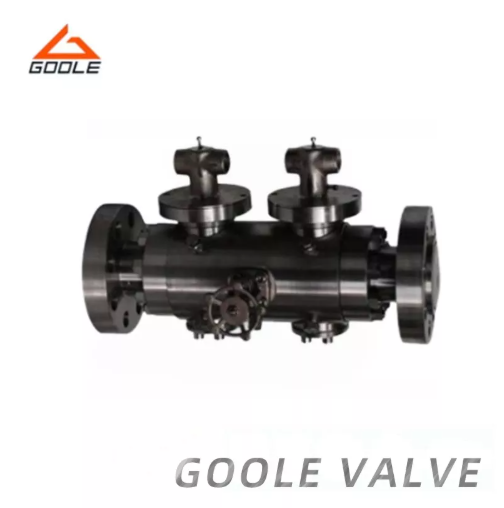
The ball is the closure element, and the stem transmits rotation from the operator or actuator. The lower trunnion supports the ball at its base and prevents axial shift under pressure loads. Together they form a fixed-rotation structure that keeps the ball centered and aligned. When pressure acts on the upstream face of the ball, the resulting forces are carried through the support system into the body rather than pushing the ball into a seat. This reduces axial thrust on the stem and helps stem sealing remain stable. It also allows the design to scale to larger sizes, where the mass of the ball and the magnitude of pressure forces become significant. In practice, this support structure is the mechanical “backbone” that makes a Trunnion Ball Valve feel stable and predictable under load.
To make the sealing mechanism easier to apply in engineering and procurement, the seat-and-spring concept is translated into structured parameters, performance criteria, and inspection points that can be directly used for specification and acceptance.
| Element | Role in a Trunnion Ball Valve | Typical Design Approach | Technical Indicators (units / standards) | Typical Applications | Procurement & Inspection Notes |
|---|---|---|---|---|---|
| Seat assembly (overall) | Forms the sealing line by moving slightly toward the fixed ball | Floating seat with controlled axial travel and spring backing | Seat sealing verified by ISO 5208 leakage classes referenced by API 6D | High-pressure isolation, pipeline block valves | Confirm seat mobility is compatible with DBB and cavity pressure control logic |
| Spring preload | Provides initial sealing force at low pressure and during transients | Multiple coil springs or wave springs behind the seat | API 6D requires low-pressure seat test with defined hold time by NPS size | Startup conditions, gas testing, intermittent service | Request low-pressure seat test reports matching valve size and class |
| Pressure energization | Uses line pressure to increase seat-to-ball contact force as ΔP rises | Upstream seat pressure-assisted; dual-direction designs energize either seat | API 6D links soft seats to ISO 5208 Rate A and metal seats to Rate D | High differential pressure shutoff, emergency isolation | Specify leakage class explicitly (Rate A or D) in data sheets and contracts |
| Soft seat (polymer) | Maximizes tight shutoff and smooth torque | PTFE, reinforced PTFE, or PEEK-based materials | Typical continuous service temperature: PTFE up to 260 °C (500 °F); PEEK up to 260 °C | Clean media, automated on/off duty | Require material certificates and temperature limits in documentation |
| Metal seat | Prioritizes temperature and wear resistance | Metal-to-metal sealing faces with hardening or overlay | Acceptable leakage usually ISO 5208 Rate D under API 6D | High-temperature service, abrasive or dirty media | Do not specify “zero leakage”; reference the correct ISO leakage class |
| Leakage classification (ISO 5208) | Quantifies sealing performance with measurable flow limits | Rate A/B/C/D | Example at DN100, low-pressure gas test: Rate A = 0 ml/min; Rate B ≈ 1.8 ml/min; Rate C ≈ 18 ml/min; Rate D ≈ 180 ml/min | Acceptance testing and vendor comparison | Ensure reports state medium, pressure, DN size, and leakage in ml/min |
| High-pressure seat test | Verifies sealing under rated pressure conditions | Hydrostatic test per pressure class | Example: test pressure ≈ 1.1 × ASME B16.34 class rating; leakage evaluated by ISO 5208 rate | Liquid pipelines, station isolation valves | Require test pressure, duration, and measured leakage values in reports |
| Standard linkage (API 6D + ISO 5208) | Aligns design intent with acceptance criteria | API 6D directly references ISO 5208 leakage classes | Soft seat ≤ Rate A; metal seat ≤ Rate D under specified conditions | Long-distance pipelines, third-party inspection | Write both standards into specifications to avoid interpretation gaps |
Bearings are critical for reducing friction and stabilizing torque. They support the stem and trunnion journals, helping the ball rotate smoothly while staying aligned. This is especially valuable in larger valves, where the rotating assembly is heavy and pressure loads are high. The actuation interface then translates that stable torque requirement into a practical drive method, such as a lever, gear operator, or automated actuator. Many Trunnion Ball Valve installations use pneumatic or electric actuators for remote operation, shutdown duties, or high cycle counts. A stable torque profile improves actuator selection, reduces oversizing, and supports more consistent performance over time. For B2B teams, bearings and the actuation interface are often where reliability is won, because they shape how the valve behaves under real service loads.
Many Trunnion Ball Valve designs can seal in both flow directions, but the actual behavior depends on seat design. In a bi-directional configuration, each seat can form an effective sealing line against the ball, and spring preload supports initial sealing regardless of flow direction. Pressure assistance then strengthens sealing on the upstream seat, which changes depending on which side is pressurized. For users, the practical value is flexibility: commissioning sequences, maintenance isolation, and process reversals become easier to manage when the valve can reliably shut off from either direction. From an EEAT perspective, the key is to tie this requirement to test standards and real operating scenarios, because “bi-directional” on paper should align with how the valve is tested, installed, and operated in the field.
DBB is a common specification for critical isolation. In a typical DBB arrangement, two seats can isolate upstream and downstream simultaneously, allowing the body cavity between them to be bled off through a bleed port. This gives two practical advantages. First, it provides a way to verify seat integrity by observing whether pressure rebuilds in the cavity after bleeding. Second, it helps safely vent trapped pressure before maintenance activities. In a Trunnion Ball Valve, DBB behavior is closely tied to the seat system, because each seat must seal reliably against the ball under the expected pressure conditions. For B2B operations, DBB is as much about procedure as design: the valve supports verification, but teams need consistent lockout, bleed, and monitoring practices to get the full safety value.
When the valve is closed, fluid can become trapped in the body cavity around the ball. Temperature increases can expand that trapped fluid and raise cavity pressure. Many Trunnion Ball Valve designs address this risk through seat behavior that allows cavity pressure relief toward the line side, or through dedicated relief devices or bleed ports. The right approach depends on media type and service conditions. Liquids tend to create higher cavity pressure during thermal expansion than gases, so cavity management becomes more critical in many liquid lines. From a specification standpoint, cavity pressure control should be treated as a safety and reliability feature, not a minor detail. It helps protect seats, reduces stress on the body, and supports safer maintenance practices when operators use bleed functions to confirm isolation.
The core mechanical difference is what shifts under pressure. In a floating ball valve, the ball can move slightly downstream and pressure pushes it into a seat to create sealing force. In a Trunnion Ball Valve, the ball remains supported and fixed, and the seats move toward the ball to create the sealing line. This changes how forces are distributed, how the valve behaves at high differential pressure, and how wear develops over repeated cycles. Buyers often benefit from this simple mental model: if pressure needs to push the ball into the seat, it is a floating design; if the ball stays fixed and seats do the sealing work, it is a trunnion design. That difference is not just theoretical—it influences torque stability, scalability to large sizes, and suitability for high-pressure pipelines.
Floating designs can see a stronger torque increase as differential pressure rises, because the ball is forced into the seat and friction increases. In a Trunnion Ball Valve, trunnion supports carry pressure loads and reduce the tendency for pressure to wedge the ball into the seat. Seats apply sealing force in a controlled manner, often supported by bearings that reduce friction during rotation. The practical outcome is typically a more stable torque profile across operating pressures. That stability matters in automated systems, where actuator sizing needs confidence and emergency shutdown functions must operate reliably. It also matters for large valves, where even small increases in friction can translate into large increases in required torque. For procurement teams, torque stability can reduce lifecycle cost by avoiding actuator oversizing and minimizing operational surprises.
Application fit should follow the working principle. A Trunnion Ball Valve is often chosen where pressure is high, line size is large, isolation is critical, or actuation reliability is a priority. The fixed ball support and seat-driven sealing make it a strong match for pipeline duties and demanding shutoff requirements. Floating ball valves often fit smaller sizes or lower pressure duties where simplicity and compactness are primary goals. The best selection approach is to work backward from operating reality: expected differential pressure at closure, cycle frequency, shutoff class needs, and actuator strategy. When those requirements point to stable torque and controlled sealing under high load, the trunnion mechanism provides a clear operational advantage.
| Feature | Trunnion Ball Valve | Floating Ball Valve |
|---|---|---|
| Ball support | Fixed by stem + trunnion | Ball can float slightly |
| Sealing driver | Seats move to the ball | Pressure pushes ball to seat |
| Torque trend at high ΔP | More stable | Can rise more sharply |
| Typical fit | High pressure, large bore, critical isolation | Smaller sizes, general isolation |
Body construction shapes how loads are handled and how maintenance is performed. Some Trunnion Ball Valve designs use split bodies, while others use fully welded bodies for pipeline service. Top-entry designs can support in-line maintenance, allowing internal access without removing the valve from the line, which can reduce downtime for critical stations. Welded bodies often reduce external leak paths and fit long-distance pipeline practices, especially where removal is costly. Regardless of style, the body must carry the forces transferred from the trunnion supports and seat system, so load distribution and structural integrity remain central to performance. For B2B projects, body style should be selected based on site access, maintenance strategy, and reliability targets, not only on initial cost.
Seat choice changes sealing performance and operating behavior. Soft-seated Trunnion Ball Valve designs often deliver very tight shutoff and smooth torque, which can be valuable for isolation and testing. Metal-seated designs are often selected for higher temperature service or conditions where abrasion and erosion are concerns. In both cases, the same seat-driven mechanism applies: springs provide initial preload, and pressure can assist seat loading for stronger shutoff under differential pressure. The difference is how materials handle heat, wear, and surface interaction. For specifications, seat technology should be aligned with media type, temperature range, particulate presence, and shutoff class expectations. When these variables are clear, seat selection becomes a straightforward engineering decision rather than a guess.
Fire-safe and special-service designs adapt materials and sealing strategies to specific risks, while the basic trunnion mechanism remains the same. Fire-safe configurations typically rely on backup sealing concepts that maintain isolation after extreme heat exposure, often using metal sealing features that can function when soft components degrade. Other special services include anti-static features for hazardous media, extended bonnets for temperature extremes, and material compliance for sour service or corrosive environments. Each option should be driven by applicable standards and site safety rules. From a buying perspective, the key is to require evidence of performance testing and material traceability. That supports confidence in the Trunnion Ball Valve design for the specific duty it must survive.
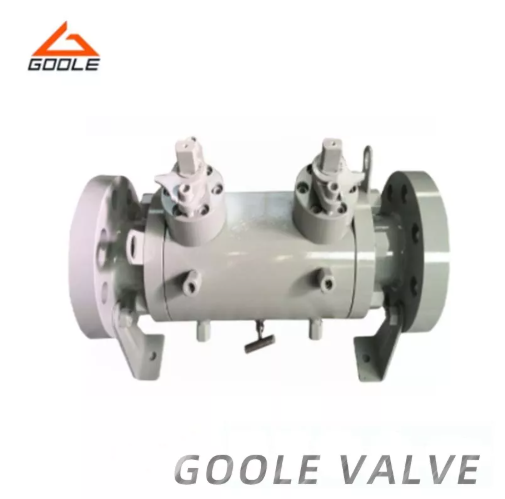
Selection should start from pressure conditions, especially differential pressure at closure. A Trunnion Ball Valve is often chosen because its load path supports high ΔP without destabilizing torque. Match pressure class to maximum operating pressure and include surge conditions where relevant. Then consider operating temperature, because ratings depend on temperature. Next, define the shutoff requirement and the test method that will be used to verify it. If the valve must close under flow or frequent high ΔP events, request torque data for those conditions. Torque information should include breakaway torque and running torque, since breakaway often drives actuator sizing. This approach makes selection defensible and reduces the risk of commissioning surprises, especially in automated or safety-critical stations.
Media and temperature dictate materials, seat technology, and sealing strategy. For a Trunnion Ball Valve, clean gas service may prioritize smooth torque and tight sealing, while abrasive or contaminated media can place more emphasis on seat durability and material hardness. Temperature range also shapes packing choice and seat materials, since polymers and elastomers have defined service limits. Chemical compatibility is equally important, because some materials can swell or degrade in certain fluids. When uncertainty exists, document it as “needs verification” and resolve it during engineering review. A disciplined compatibility process supports reliability and prevents premature seat damage. For B2B projects, this step also supports compliance, because material decisions often feed into quality documentation and inspection requirements.
End connections influence leak risk, maintenance ease, and installation cost. Flanged connections support easier removal and replacement, while welded ends reduce external leak paths and can be preferred in pipelines. Actuation should be chosen based on cycle rate, response time, and fail-safe needs. Pneumatic actuators can deliver fast operation for shutdown duties, while electric actuators support remote control and integrated feedback. Gear operators can support manual operation on mid-size valves when torque remains manageable. Regardless of actuator type, sizing should use verified torque curves and include safety factors for temperature and service variation. In a Trunnion Ball Valve, stable torque simplifies these decisions, but it does not eliminate the need for disciplined sizing. Good actuation planning protects seats and supports reliable isolation.
| Selection focus | What to define | Why it matters |
|---|---|---|
| ΔP at closure | Typical and worst case | Drives sealing force and torque |
| Media | Clean, corrosive, abrasive | Drives materials and seat type |
| Temperature | Min, max, cycling | Drives seat and packing choices |
| Automation | Cycle rate, fail mode | Drives actuator type and sizing |
A Trunnion Ball Valve works by fixing the ball and moving the seats. Springs seal at low pressure, while line pressure strengthens sealing under load. Trunnion supports keep torque stable and operation predictable. This knowledge improves valve selection and safe use. Goole Valve technology Co., Ltd. provides trunnion ball valves with reliable sealing and stable torque, helping customers achieve secure isolation and efficient pipeline control.
A: A Trunnion Ball Valve keeps the ball fixed on trunnions while the seats move to seal. A 90° turn aligns the bore for flow or blocks it for shutoff.
A: A Trunnion Ball Valve routes pressure loads into the trunnion supports and body, reducing ball wedging into the seats and keeping actuation more predictable.
A: A Trunnion Ball Valve uses spring preload for initial seat contact at low pressure, then line pressure energizes the seat to increase sealing force as ΔP rises.
A: A Trunnion Ball Valve seals mainly by seat movement against a fixed ball. A floating valve relies on pressure shifting the ball into the downstream seat.
A: Trunnion Ball Valve cost depends on size, pressure class, seat type (soft or metal), DBB/cavity control features, and actuator needs for torque and duty cycle.


